
If Taipei is Taiwan’s head and Tainan is its heart, then Taichung is its soul: relaxed, creative, endlessly tasty, and full of surprises you never quite expected. Taiwan’s third largest city sits comfortably in the middle of the island, which is exactly where its name comes from: “tai” for Taiwan and “zhong” meaning middle. But do not let the geography fool you into thinking this is just a stopover between north and south. Taichung is a destination in its own right, and one that more and more travelers are waking up to.
The city has a famously mild climate, a thriving cafe and arts culture, some of the best night markets in all of Taiwan, a stunning coastal wetland that turns golden at sunset, and a mountain hinterland that takes your breath away. As a Filipino traveler, Taichung won me over quickly. The pace here is gentler than Taipei, the people are warm and genuinely proud of their city, and every corner seemed to reveal another reason to stay just one more day. Ready to explore? Here are the top tourist spots in Taichung that you absolutely should not miss.
1. Gaomei Wetlands

Gaomei Wetlands is, without question, one of the most beautiful natural sights in all of Taiwan and its sunsets are the stuff of legend. Located at the mouth of the Dajia River in Qingshui District, this 300-plus-hectare coastal wetland is a protected ecological conservation area where tidal mudflats, reed beds, and shallow water channels create a rich habitat for herons, migratory birds, crabs, and countless other species. A long wooden boardwalk winds out over the flats, and at low tide the exposed mudflats create a mirror-like surface that reflects the sky and the row of wind turbines standing along the shore in one of the most photogenic scenes in Taiwan.
2. Rainbow Village (Caihong Juancun)

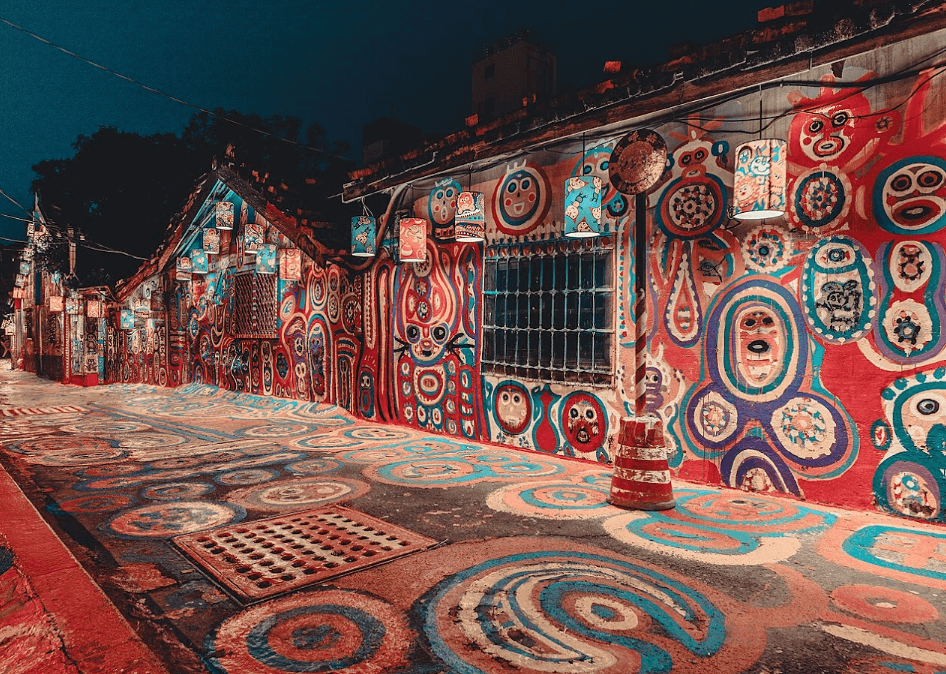
Rainbow Village is one of those stories that makes Taiwan feel genuinely magical. What was once a deteriorating military dependents’ village slated for demolition was single-handedly saved by Huang Yong-Fu, an elderly veteran in his late 80s who began painting the alley walls, roads, and house exteriors with vivid murals of animals, people, flowers, and whimsical cartoon characters. His art spread across the entire remaining cluster of homes, and the public outcry it generated was strong enough to halt the demolition plans entirely. Today, “Rainbow Grandpa’s” village is one of Taichung’s most beloved and photographed attractions, a burst of joyful color tucked between modern apartment blocks that reminds you of the power of creativity to change things. Entry is free, and it is best visited on weekday mornings before the tour groups arrive. The village is small, so combine it with other nearby attractions for a full day out.
3. Miyahara Ice Cream and Heritage Building

If there is one address every visitor to Taichung makes a point of finding, it is Miyahara. Originally built in 1927 as an ophthalmology clinic by Japanese doctor Miyahara Takeo, this stunning red-brick building was partially damaged in the 1999 earthquake and later restored to extraordinary effect by the Dawn Cake pastry company. Step inside and you are immediately transported into a space that feels like a cross between a Victorian apothecary and a Hogwarts corridor. It is towering wooden bookshelves stacked with vintage-style tins, amber lighting, ornate ironwork, and the scent of fine pastry in the air. The ice cream here is genuinely spectacular, served in elaborate towers of scoops, pineapple cake, cheesecake, and toppings.
4. Feng Chia Night Market

Ask any Taiwanese person to name their favorite night market in the country and a significant number will say Feng Chia. Located near Feng Chia University in western Taichung, this is Taiwan’s largest university-area night market and consistently ranks among the top night markets on the entire island. It is enormous, a sprawling network of lanes and side streets packed with hundreds of food vendors, fashion stalls, games, and snack shops that can keep you wandering for hours. Feng Chia is particularly famous for its innovative and often outrageously creative street food. This is the birthplace of several now-famous Taiwanese snacks including huge fried chicken cutlets, stinky tofu variations, and tower-stacked bubble tea. The energy here on a weekend night is absolutely electric, and the sheer variety of food on offer is staggering. Come hungry, wear comfortable shoes, and just follow whatever smells best.
5. National Taichung Theater

Designed by world-renowned Japanese architect Toyo Ito, the National Taichung Theater is one of the most architecturally extraordinary buildings in all of Taiwan and genuinely one of the most interesting performance spaces in Asia. The building’s form is based on a concept of interlocking curved surfaces called “sound caves”: organic, flowing walls that ripple and curve in every direction, creating an interior space that feels like something carved by water rather than built by human hands. Even if you are not attending a performance, the building is worth visiting just to walk through its public areas, sit in the outdoor terraces, and simply experience what it feels like to be inside a building this alive. The surrounding Qingxin Greenway area is pleasant for a stroll, and the theater district has a growing cluster of excellent cafes and restaurants worth exploring after dark.
6. 921 Earthquake Museum of Taiwan

On September 21, 1999, at 1:47 in the morning, a 7.3-magnitude earthquake struck central Taiwan with catastrophic force killing more than 2,400 people, destroying countless buildings, and permanently reshaping the landscape. The 921 Earthquake Museum of Taiwan, built on the site of the former Guangfu Junior High School in Wufeng District, preserves the earthquake’s aftermath exactly as it was: collapsed classroom buildings still twisted on their foundations, a school running track dramatically lifted several meters by the fault line that runs directly beneath it, and bent steel rebar jutting from broken concrete walls. It is a sobering, powerful, and deeply important place to visit, and the exhibits inside combine historical documentation with genuinely engaging interactive experiences. The earthquake simulator, where you sit in a room designed to look like a living room and experience what those violent 40 seconds actually felt like is something you will not forget easily.
7. National Museum of Natural Science

The National Museum of Natural Science in Taichung is one of the finest science museums in Asia and a world-class institution that deserves far more recognition from international travelers. Spread across a large campus with both indoor galleries and the beautiful Botanical Garden on the grounds, the museum covers everything from the formation of the universe and plate tectonics to the diversity of life on Earth and the ancient civilizations of Taiwan’s indigenous peoples. The Space IMAX Theater inside the museum regularly shows spectacular dome films, and the life-size dinosaur displays including models that move are perennially popular with visitors of all ages. The Botanical Garden adjacent to the museum is a lush and peaceful escape with themed plant collections and a lovely lily pond. Allow at least half a day here, and more if you have children who want to explore every exhibit.
8. Calligraphy Greenway (Caowudao)

The Calligraphy Greenway is a 3.6-kilometer linear green corridor that runs through the heart of Taichung, threading together some of the city’s most important cultural institutions and creative spaces in a way that makes the whole area feel like one long, walkable gallery. Named for the flowing, cursive energy of its layout, the greenway connects the National Museum of Natural Science in the north all the way down to the National Taiwan Museum of Fine Arts and the Liuchuan Riverside Park in the south, passing through artsy hangout spots, weekend markets, independent bookshops, and shaded public squares along the way. On weekends especially, the greenway fills with locals cycling, picnicking, browsing pop-up stalls, and generally being out in the world in the best possible Taichung way. It is a wonderful orientation walk for first-time visitors to the city.
9. National Taiwan Museum of Fine Arts (NTMoFA)

Located along the Calligraphy Greenway, the National Taiwan Museum of Fine Arts is the largest art museum in Taiwan and one of the most important galleries of contemporary and modern Taiwanese art anywhere in the world. The museum’s permanent collection spans painting, sculpture, ceramics, installation art, digital art, and traditional ink work, with an emphasis on showcasing the full breadth of Taiwan’s creative talent from the Japanese colonial era to the present day. Special exhibitions rotate regularly and often feature internationally significant contemporary artists alongside local voices. The building itself is striking, a massive modernist structure flooded with natural light and the surrounding sculpture park and gardens extend the artistic experience beyond the gallery walls. Admission is free, making it one of the best-value cultural experiences in all of Taichung.
10. Shenji New Village (Shen Ji New Village)

Shenji New Village is one of Taichung’s most beloved creative enclaves, a cluster of low-rise buildings and open courtyards that has been transformed into a hub for handcraft studios, independent designers, artisan food producers, and cultural workshops. The village has a charming, unhurried quality that sets it apart from flashier commercial attractions, with narrow lanes lined by potted plants and handmade signage leading you from one small shop to the next. It is particularly popular among Taiwanese people who appreciate handmade goods, local design, and the quiet satisfaction of discovering something genuinely original. Weekend afternoons bring live music, craft markets, and a festive atmosphere that makes the whole place hum. Shenji is located right along the Calligraphy Greenway, making it easy to combine with visits to the art museum or the nearby National Museum of Natural Science.
11. Chun Shui Tang — The Birthplace of Bubble Tea

Yes, you can argue about it all you want, but Chun Shui Tang in Taichung is widely credited as the place where bubble tea, now one of the world’s most popular beverages, was invented in the 1980s. The story goes that a staff member at this tea house began adding tapioca pearls to cold milk tea, and the rest is culinary history. Today, the original Si Wei store near Taichung Station is a genuine pilgrimage site for bubble tea enthusiasts, and the menu has expanded well beyond that legendary original combination into a wide range of tea-based drinks and light Taiwanese dishes. The interiors are relaxed and welcoming, with a slightly retro feel that acknowledges the brand’s historic roots. Even if you have had bubble tea a thousand times, trying it here at the source adds a layer of meaning that makes it taste just a little bit better.
12. Taichung Old Train Station

The old Taichung Train Station is a gorgeous piece of Japanese colonial heritage that stands as one of the most beautiful historic buildings in the city. Constructed in 1917, the station’s striking red-brick European-style facade complete with arched windows, ornate clock tower, and symmetrical colonnades was designated as a historic site in 1995, long before the station itself was decommissioned for daily rail service. Today, the beautifully restored building serves as a cultural landmark and events space, and the surrounding plaza has been redesigned as a pedestrian-friendly public square that honors the building’s architectural importance. The new Taichung Station right beside it handles modern rail traffic, meaning you can arrive by train and walk directly to this stunning piece of the city’s past. It is one of the best spots in the city for photography.
13. Zhongshe Flower Market
About 30 minutes from Taichung city center, the Zhongshe Flower Market is one of central Taiwan’s most beautiful seasonal attractions and a destination that changes its look dramatically depending on when you visit. The flower market and surrounding fields bloom in spectacular rotating displays throughout the year tulips in spring, sunflowers in summer, cosmos in autumn, and various other cultivated flower arrangements that are planted specifically for the visual impact. The fields are enormous and the colors are absolutely vivid, making for photographs that look almost too saturated to be real. Morning visits in good light are ideal for photography, and weekday trips avoid the weekend crowds that can make the narrow paths through the flower fields feel quite congested. It pairs well with a visit to the nearby Dakeng Scenic Area for a full half-day out of the city.
14. Dakeng Scenic Area
.jpg)
For hikers and nature lovers who want to stretch their legs without going too far from Taichung city, Dakeng Scenic Area in the northeastern foothills is the local’s go-to outdoor escape. The area encompasses a series of well-maintained hiking trails that wind through dense subtropical forest with occasional clearings that reveal sweeping views across the Taichung basin below. The trails range from easy strolls to more challenging ridge walks, and the whole network is connected well enough that you can link trails together for a longer outing. The air up in the Dakeng hills is noticeably cleaner and cooler than in the city, the bird life is excellent, and the wildflowers along the lower trails are beautiful in spring. It is the kind of uncrowded, genuinely green hiking that makes you realize how much Taiwan’s cities are surrounded by real wilderness.
15. Wuling Farm

High in the mountains of Heping District at an elevation of about 1,740 meters, Wuling Farm is one of the most celebrated scenic destinations in central Taiwan and a place that shifts personality completely with the seasons. In late winter and early spring, the farm explodes into one of Taiwan’s most famous cherry blossom spectacles the mountainsides turning pink and white with thousands of blooming trees, drawing enormous crowds of visitors who come from across the island and beyond just to see them. Outside of cherry blossom season, the farm remains beautiful with apple orchards, peach trees, hiking trails, and the clear mountain air of the Snow Mountain range surrounding it. The drive up through the river gorge to reach Wuling is dramatic and scenic in its own right.
16. Pao Chueh Temple (Bao Jue Temple)

Pao Chueh Temple, also known as Bao Jue Temple, is Taichung’s most distinctive and architecturally extraordinary religious site, and it stands out even among Taiwan’s already remarkable collection of temples. What makes it special is the sheer riot of color and visual complexity covering every surface the rooftops are stacked with pagodas, dragons, mythical figures, and intricate ceramic tilework in every shade imaginable, creating a skyline that seems to grow taller and more elaborate the longer you look at it. The temple compound is active and atmospheric, with incense smoke drifting through the courtyards and devotees praying at the various shrines throughout the day. It is a genuinely stunning piece of traditional Taiwanese religious architecture, and the surrounding neighborhood has a pleasant local character that rewards a slow, unhurried wander.
17. Taichung Cultural Heritage Park
.jpg)
The Taichung Cultural Heritage Park occupies the site of a former government-run liquor factory that was one of the largest breweries in Taiwan during the Japanese colonial period. After the factory closed, the complex of handsome red-brick industrial buildings was thoughtfully converted into an open cultural space that preserves the architectural character of the original site while hosting rotating art exhibitions, cultural events, music performances, and artisan markets in the repurposed factory halls. It has a similar spirit to Taipei’s Huashan 1914 Creative Park, with that characteristic mix of heritage atmosphere and contemporary creative energy that makes these adaptive reuse spaces so compelling to explore. There are also some excellent cafes and small studios within the complex that make it a perfect afternoon destination. The park is open daily and entry to most areas is free.
18. Lihpao Land (Lihpao Discovery Land)
For a full day of theme park thrills, Lihpao Land is Taiwan’s largest integrated resort and a destination that somehow manages to combine an exciting amusement park, a water park, a hotel complex, outlet mall shopping, and an international racing circuit into one sprawling property in Houli District. The park features the world’s only tilting roller coaster, a Ferris wheel that is one of the largest in Taiwan, and a wide range of rides and water attractions suitable for all ages. The water park, Mara Bay, is particularly popular during the hot summer months. While it is not the flashiest theme park by international standards, the combination of entertainment options and the scale of the resort complex make it a genuine full-day outing for families.
19. National Taiwan Museum of Comics
.jpg)
One of Taichung’s newest and fastest-growing major attractions, the National Taiwan Museum of Comics opened in early 2024 on the grounds of a former historic prison complex, and the combination of setting and subject matter is as fascinating as it sounds. The repurposed prison buildings and expansive grounds have been transformed into a green, open campus dedicated to the history, art, and cultural impact of comics in Taiwan from early newspaper strips through the golden age of Taiwanese manga to the vibrant contemporary scene of graphic novels and digital comics. The archives, reading rooms, interactive exhibits, and thematic exhibition halls make it engaging for both hardcore comic fans and casual visitors. The site is still expanding and is expected to fully open by 2029, which means each visit over the coming years will reveal something new. Do not miss the stamp-collection trail that winds through the grounds.
20. Jenn Lann Temple (Dajia Mazu Temple)

In Dajia District, about 40 minutes north of Taichung city center, stands one of Taiwan’s most spiritually significant and culturally fascinating religious sites Jenn Lann Temple, dedicated to Mazu, the goddess of the sea and one of the most widely worshipped deities in Taiwan. The temple itself is magnificent, with a grand multi-story facade, intricate stone carvings, and a continuously bustling atmosphere of devotion. But what makes Jenn Lann Temple truly extraordinary is the annual Dajia Mazu Pilgrimage a nine-day, roughly 340-kilometer procession that takes place each spring and draws hundreds of thousands of participants who follow the Mazu statue by foot through towns and temples across central and southern Taiwan. It is one of the world’s great religious events and one of the most important cultural traditions in Taiwan. Even outside of pilgrimage season, the temple is deeply atmospheric and well worth the trip from Taichung.
Taichung has a way of sneaking up on you. You arrive thinking you will spend a day, maybe two, and then suddenly you are on your fourth morning, planning one more temple visit, one more bowl of noodles, one more sunset at the wetlands. That is what this city does to people. It draws you in gently, without the urgency of Taipei or the historical weight of Tainan, and then keeps you with its warmth, its creativity, and its very particular rhythm that feels unlike anywhere else in Taiwan.
The top tourist spots in Taichung covered in this guide are the starting point, but the city’s best moments are often the ones you stumble into — a tiny cafe tucked behind a night market stall, a temple festival that just happens to be in full swing when you walk past, a conversation with a local who insists you try something you would never have ordered on your own. That is Taichung in a nutshell. Go with an open schedule, an empty stomach, and an appreciation for the beautifully ordinary. Taiwan’s middle city is ready for you.
Found your next Taiwan stop? Save this guide and share it with your travel companions — Taichung is always better with good company!
Leave a Reply