
Malabon and Navotas sit side by side in the northern part of Metro Manila, and together they hold more church history than most people expect. These are fishing communities with deep roots, and their parishes reflect that, built through hardship, rebuilt after earthquakes and war, and kept alive by communities that refused to let go of their faith. If you’re planning your Visita Iglesia route through the north, here’s a guide to the beautiful churches in Malabon and Navotas worth visiting this Holy Week.
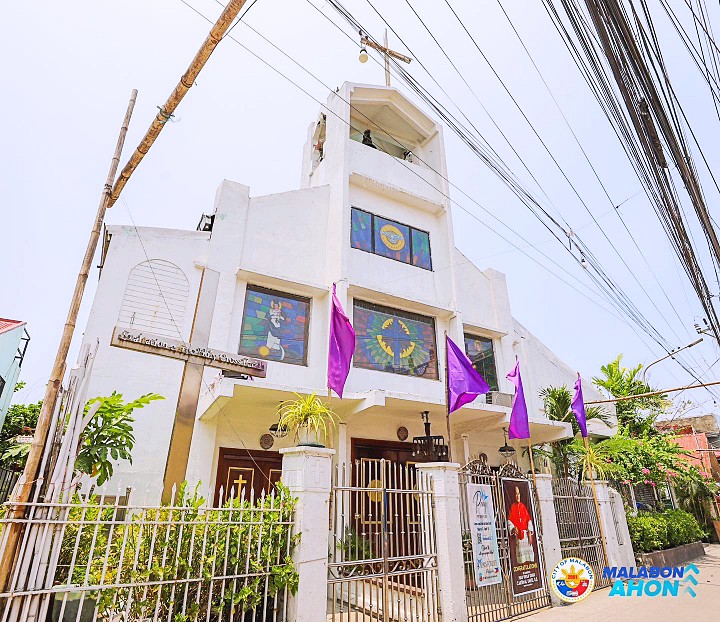
Exaltation of the Holy Cross Parish
31 A. Gervacio St., Malabon Facebook
This parish began with a discovery. In 1867, a fisherman named Tiburcio Cabiching found a cross formed from a branch of a duhat tree. The cross was reported to be miraculous, and a chapel was built immediately at the site. For decades, the chapel and its cross survived disputes, the Aglipayan Schism of 1902, and the efforts of those who tried to keep the cross from the people. Through all of it, the residents of Hulong Duhat held on to their Catholic faith. The parish was formally established on September 26, 1994, by Cardinal Jaime Sin. The community even formed the Hulong Duhat Community Movement to raise funds for its construction.
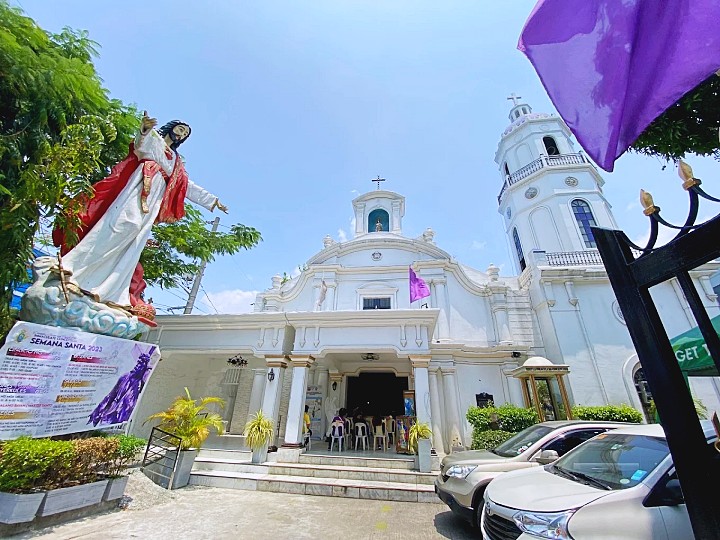
Immaculate Conception Parish
272 Gen. Luna St., Malabon Facebook
This parish goes back to 1899, when a bamboo and asbestos chapel dedicated to the Immaculate Conception was first built in Malabon. The earthquake of 1879 demolished the structure, but the image of the Immaculate Conception survived without damage. Reconstruction began immediately, and a bigger church was completed in 1886. In 1902, Aglipayans seized the chapel during their schism, but Catholic residents refused to abandon their faith. The Supreme Court of the Philippines, later backed by the American Supreme Court, ordered the Aglipayans to surrender the chapel in 1906. On September 8, 1907, the feast of the Nativity of Mary, the chapel was declared a parish.
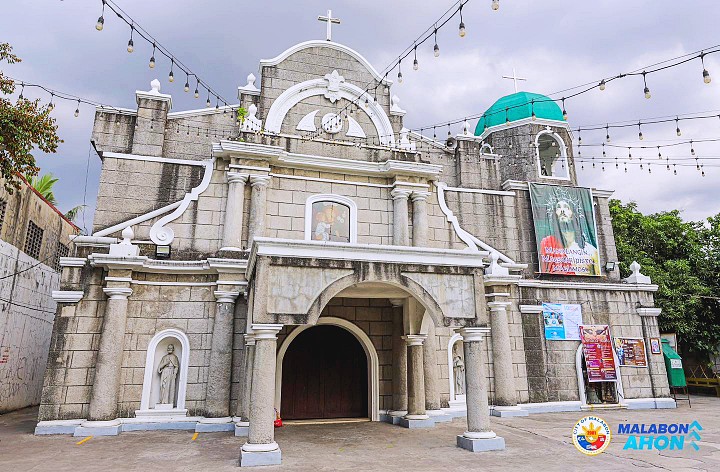
San Antonio de Padua Parish
Gabriel St., Malabon Facebook
This parish owes its existence to the generosity of one woman: Doña Geronima Gabriel, known affectionately as Impong Memang. A devout Catholic and friend of the Spanish friars, she gave part of her estate in 1896 for the construction of the San Antonio de Padua Chapel. When she died in 1904, her daughter carried on as caretaker. Cardinal Sin visited the chapel on June 13, 1986, and after celebrating Mass, remarked that the church was too big for a chapel. That observation set things in motion. On July 1, 1989, San Antonio de Padua was formally established as a parish. The community nicknamed it the “floating church” because it floods regularly during the rainy season, but its parishioners have never let that stop them from showing up.
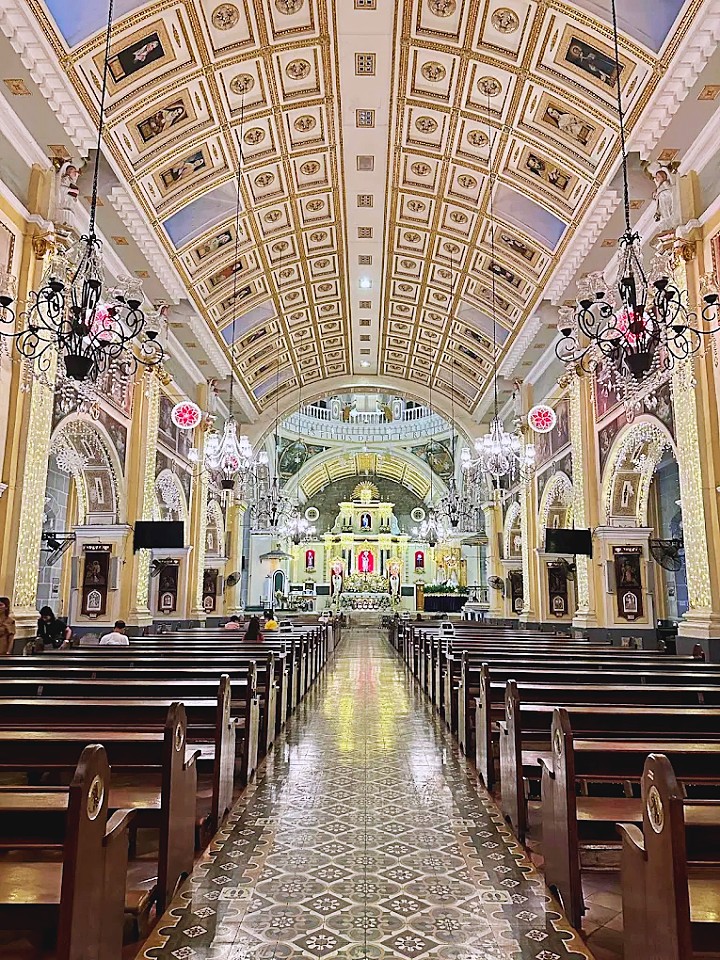
San Bartolome Parish (Malabon Church)
Rizal Ave. Ext., San Agustin, Malabon Facebook
San Bartolome Parish is the oldest and most architecturally significant of the beautiful churches in Malabon and Navotas. Malabon was founded on May 21, 1599, and became an independent parish on May 17, 1614. The construction of the first stone church began in 1622. Over the next two centuries, succeeding priests added the transept, the two lateral aisles, and a media naranja dome. In 1861, a Parthenon-like facade with twin towers was built, featuring eight imposing Ionic columns reminiscent of a Greco-Roman temple. The church measures 70.14 by 25.05 meters, with a central nave, two aisles, a transept, and a barrel vault dome. The main entrance is a Jubilee door with wood carvings, and the ceiling is lined with numerous paintings framed in gold leaf. Writer I.V. Mallari, a native of Malabon, once described it as “one of the most beautiful examples of ecclesiastical architecture that Spain has left this country.” For your Visita Iglesia route, this is the anchor stop in Malabon.
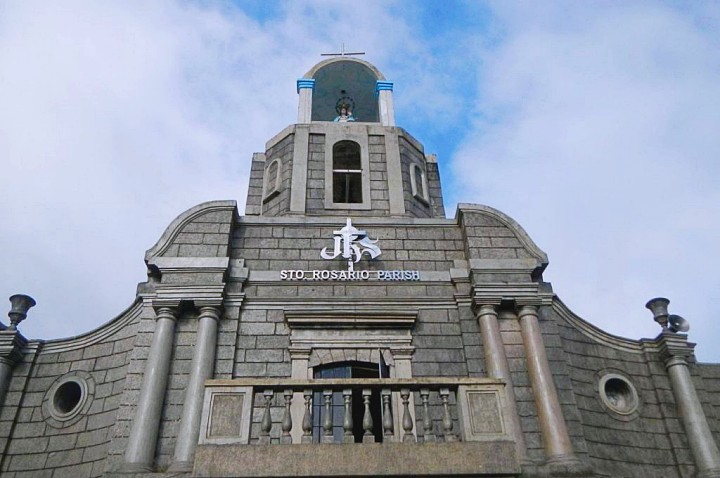
Santo Rosario Parish
Don Basilio Bautista Blvd., Dampalit, Malabon Facebook
Santo Rosario Parish sits in Dampalit, a barangay whose name is said to come either from the dampalit plants that once grew abundantly in the area, or from the Tagalog phrase “daang paliit,” meaning a narrow road. The church was built using Baroque architecture under Augustinian supervision, on a lot donated by Kapitana Elena Naval Paez. It began as a chapel under the Immaculate Conception Parish before eventually becoming its own parish. The community’s devotion to Our Lady of the Most Holy Rosary has been its constant thread through all the changes over the years.
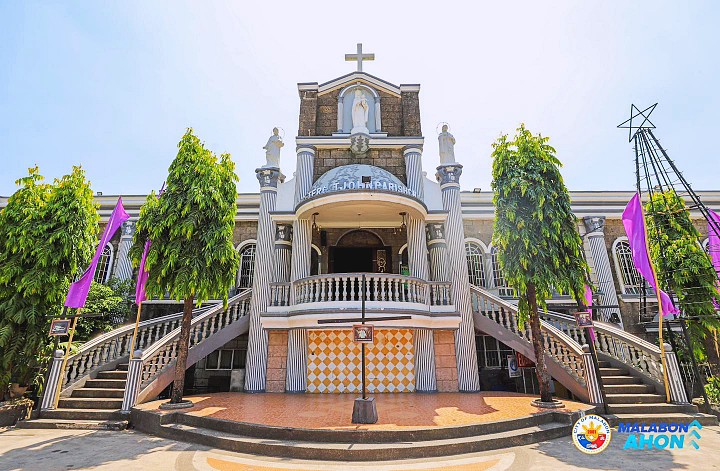
Saints Peter and John Parish
Potrero, Malabon Facebook
This parish was conceived by Rev. Fr. Clemente Lopez, who saw the need for a permanent church structure for the community in Potrero. The land was acquired through Cardinal Rufino Santos in August 1963, and the steel structure of the church was donated by the Araneta family. Don Salvador Araneta named the parish in honor of Saint Peter, representing the elderly, and Saint John, representing the youth. That dual dedication gives the church a character that spans generations, and it shows in the active parish life that has grown around it over the decades.
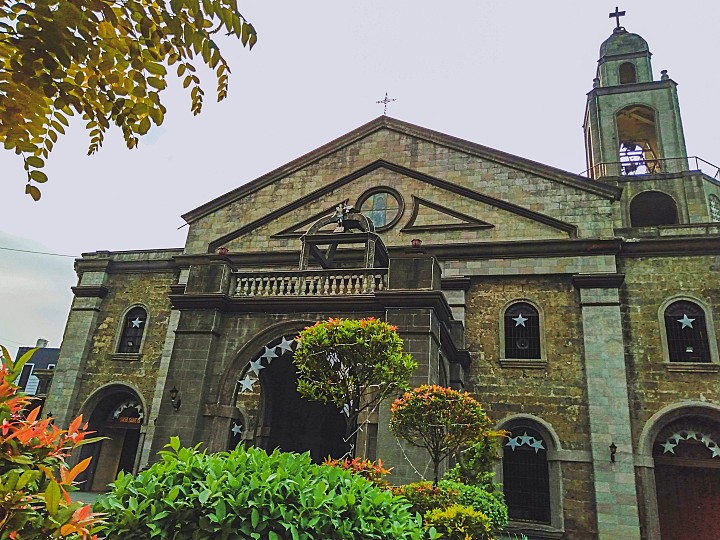
San Jose de Navotas Parish
Naval St., San Jose, Navotas Facebook
San Jose de Navotas Parish was canonically erected on July 1, 1859, and construction of the provisional church began just months later. By 1860, the main altar was completed and the belfry erected. In the decades that followed, the parish survived two major earthquakes, the Aglipayan Schism, a destructive typhoon in 1934, and the Japanese occupation during World War II. Parish records were taken to Bulacan for safekeeping during the war, but were burned when the battlefront shifted there. Through all of it, the people of Navotas rebuilt. The present-day parish structure, whose altar was completed in April 1895, is a testament to the endurance of a fishing community that has always kept its faith intact.
Explore More Beautiful Churches in Metro Manila
Your Visita Iglesia journey doesn’t stop here. We’ve put together city-by-city guides to help you plan your Holy Week route across Metro Manila, one church at a time.
See All Beautiful Churches Here
Leave a Reply