
If every city in Taiwan has a personality, then Tainan’s is the wisest and the warmest of them all. This is the oldest city on the island, the original capital of Taiwan, and the place where the country’s history runs deepest and its street food is most legendary. Walking through Tainan is like reading Taiwan’s biography in real time, with layers of Dutch colonialism, Chinese dynastic rule, Japanese occupation, and homegrown Taiwanese identity stacked one on top of the other across centuries of sun-baked brick and incense-soaked temple courtyards.
Locals will tell you that Tainan is the food capital of Taiwan, and they are not wrong. The city’s culinary traditions are unlike anywhere else on the island, from silky milkfish congee eaten at six in the morning to coffin bread stuffed with creamy seafood stew, to the particular sweetness that runs through almost every dish here and somehow never gets old. But Tainan is more than a food destination. It is Taiwan’s most historically rich city, its most temple-dense, and arguably its most authentically itself. Here are the top tourist spots in Tainan that deserve your full attention.
1. Chihkan Tower (Fort Provintia)

Address: No. 212, Section 2, Minzu Road, West Central District, Tainan City 700
Chihkan Tower is one of the most iconic historical landmarks in all of Taiwan and the place where the country’s colonial story is written most vividly in brick and mortar. Originally built by the Dutch in 1652 as a trading post and administrative fortress called Fort Provintia, the complex was seized by Ming loyalist Koxinga when he expelled the Dutch in 1662. The red-tiled pavilions and ornate curved eaves you see today were added during the Qing Dynasty, built atop the original Dutch foundations in a striking fusion of European and Chinese architectural styles. Nine stone steles carved with tortoise figures stand in the courtyard, commemorating the suppression of a rebellion, and at night the entire complex glows warmly under soft illumination that makes the centuries-old stonework feel alive.
2. Tainan Confucius Temple

Address: No. 2, Nanmen Road, West Central District, Tainan City 700
Built in 1665 during the reign of Koxinga’s son Zheng Jing, the Tainan Confucius Temple is the oldest Confucian temple in Taiwan and carries the proud title of “First Academy of Taiwan.” Unlike the busy, incense-heavy atmosphere of Tainan’s many Taoist and Buddhist temples, the Confucius Temple carries a quieter, more scholarly dignity, with serene courtyards shaded by ancient banyan trees, classical calligraphy on the wooden beams, and the solemn Dacheng Hall at its center housing the memorial tablet of Confucius. The complex is the only institution in Taiwan that still performs the traditional ceremony of offering three animals to worship Confucius. The surrounding neighborhood is full of historic charm, with traditional shops and old lanes perfect for a slow post-visit wander. Entry is free, and the temple is most atmospheric in the early morning before the tour groups arrive.
3. Anping Fort (Fort Zeelandia)

Address: No. 82, Guosheng Road, Anping District, Tainan City 708
Anping Fort is where Taiwan’s recorded colonial history begins. Built by the Dutch in 1624, Fort Zeelandia was the first permanent European fortification on the island and served as the seat of Dutch colonial government for nearly 40 years before Koxinga besieged and captured it in 1662 after a grueling nine-month campaign. Today the remaining red-brick walls, bastions, and restored exhibition halls of the fort sit within a beautifully landscaped heritage park that tells the full story of the Dutch occupation and Koxinga’s historic expulsion. The Fort Zeelandia Museum inside the complex displays precious historical artifacts including ancient ceramics, wall anchors, and Anping pots. Climbing the lookout tower gives you a wide view across the Anping District and the surrounding canal waterway. The nearby Anping Old Street and Anping Treehouse are easy walking distance, making this the natural anchor point for a full Anping District day.
4. Anping Treehouse (Anping Tree House)

Address: No. 108, Guhua Street, Anping District, Tainan City 708 (near Anping Fort)
The Anping Treehouse is one of the most visually extraordinary and genuinely haunting attractions in southern Taiwan. What started as a salt merchant’s warehouse in the late 19th century was abandoned for decades, during which the surrounding banyan trees gradually sent their roots into the crumbling brick walls, through the roof beams, and across the floors in a slow, inevitable reclamation by nature. The result is something that looks like it was lifted directly from a Studio Ghibli film: a ghostly, root-threaded ruin where massive tree trunks grow through windows and aerial roots cascade down weathered walls like frozen waterfalls. Elevated viewing platforms and walkways let you explore the old warehouse structure from above, gaining a perspective on the extraordinary entanglement of tree and building that is impossible from ground level. It is fascinating, atmospheric, and genuinely unlike any other attraction in Taiwan.
5. Chimei Museum
.jpg)
Address: No. 66, Section 2, Wenhua Road, Rende District, Tainan City 717
The Chimei Museum is one of the most unexpected and magnificent cultural institutions in Taiwan, a Neo-Classical palace of a building surrounded by European-style gardens, fountains, and sculpture that looks as though it was transplanted from Versailles to the southern suburbs of Tainan. Founded by Shi Wen-long, the late philanthropist and founder of the Chimei Corporation, the museum houses a staggering collection that spans ancient weaponry from cultures around the world, natural history specimens, and fine art, including what is believed to be the world’s largest private collection of antique violins, with over 1,300 instruments. The outdoor grounds are free to visit and extremely popular with local families who come to picnic around the Apollo fountain and artificial lake. Plan at least three hours inside the museum and another hour for the gardens.
6. Ten Drum Cultural Village

Address: No. 326, Section 2, Wenhua Road, Rende District, Tainan City 717
Set within the beautifully repurposed buildings of a former Japanese-era sugar refinery, Ten Drum Cultural Village is one of Taiwan’s most dynamic and exciting cultural theme parks, built around the art of traditional Taiwanese percussion. The Ten Drum Art Ensemble, one of Taiwan’s most celebrated performance groups, created this space as a living showcase for their craft, and the centerpiece drum performances that run throughout the day are genuinely thunderous, physically visceral experiences that you feel as much as hear. Beyond the performances, the park offers aerial obstacle courses running between the old factory chimneys, a sky walk with sweeping views across the complex, interactive drumming workshops where you can learn basic rhythms yourself, and a collection of artisan shops and cafes within the repurposed factory buildings. The industrial heritage architecture gives the whole venue a dramatic, atmospheric character that makes it feel unlike any other attraction in Taiwan. Combine it with a visit to Chimei Museum nearby for a full day out.
7. Sicao Green Tunnel (Little Amazon)
.jpg)
Address: No. 4, Sicao Road, Annan District, Tainan City 709 (near Sicao Dazhong Temple)
The Sicao Green Tunnel is one of those places that sounds simple but turns out to be genuinely magical in person. A narrow canal cutting through the Taijiang National Park wetlands has been completely enclosed by a canopy of mangrove trees whose branches meet overhead, forming a living green tunnel of filtered light and still, dark water that the boats glide through in near-total silence. The 30-minute flat-bottomed boat tour through the tunnel and the surrounding mangrove waterways is one of the most serene and unusual nature experiences in southern Taiwan. In winter, the park becomes a crucial resting ground for migratory black-faced spoonbills, a globally endangered species, and longer tours into the broader wetland are available for serious birdwatchers. The adjacent Sicao Dazhong Temple, a short walk from the boat pier, is one of the most visually striking temples in the Tainan area and well worth a visit before or after the canal tour.
8. Shennong Street

Address: Shennong Street, West Central District, Tainan City 700 (runs between Haian Road and the former Five Channels area)
Shennong Street is one of Tainan’s most beloved and atmospheric lanes, a short stretch of old shophouses shaded by mature trees and lined with independent cafes, art studios, vintage shops, and creative spaces that have made it the unofficial heart of Tainan’s hipster and arts community. The street follows the route of one of Tainan’s ancient canals from the Qing Dynasty, and the narrow facades of the old buildings preserve a scale and intimacy that feels completely different from modern Taiwanese commercial streets. In the evening especially, the warm glow from the cafe windows, the lanterns strung between the buildings, and the relaxed crowd of locals and visitors lingering over coffee and conversation create an atmosphere that is hard to leave.
9. Garden Night Market (Huayuan Night Market)

Address: No. 1, Ximen Road, Section 6, North District, Tainan City 704 (open Thursday, Saturday, and Sunday evenings)
The Garden Night Market is the largest and most famous night market in Tainan and consistently ranks among the top night markets in all of Taiwan. On open evenings, what is ordinarily a large parking lot transforms into a city within a city, with hundreds of food stalls, game booths, fashion vendors, and entertainment options spread across a vast open area that can comfortably accommodate the enormous crowds it draws. The food selection is a serious introduction to Tainan’s culinary heritage, with all the local classics available in abundance: coffin bread, milkfish soup, oyster omelette, eel noodles, shrimp rolls, and the city’s famous sweetened desserts. It has been called a “human conveyor belt” by regulars because of how steadily the crowds flow through the lanes.
10. Hayashi Department Store

Address: No. 63, Zhongyi Road 2nd Section, West Central District, Tainan City 700
Hayashi Department Store is one of the most charming and historically significant buildings in central Tainan, a six-story Art Deco masterpiece built in 1932 during the Japanese colonial period that was once the most glamorous shopping destination in southern Taiwan. After decades of closure and partial damage from the 1999 earthquake, the building was meticulously restored and reopened as a boutique department store selling Taiwanese craft goods, luxury teas, handmade jewelry, fine ceramics, artisan food products, and locally designed clothing. The building retains the original elevator, making it home to the oldest elevator still in operation in Taiwan, which adds a wonderfully nostalgic dimension to the shopping experience. The rooftop level houses a small Shinto shrine from the Japanese colonial era that is beautifully preserved and offers a lovely terrace view across the downtown Tainan roofscape.
11. Koxinga’s Shrine (Yanping Junwang Shrine)

Address: No. 152, Kaishan Road, East District, Tainan City 701
Koxinga, whose formal name was Zheng Chenggong, is the most important historical figure in Tainan’s story. This Ming Dynasty loyalist and military commander expelled the Dutch from Taiwan in 1662 after a nine-month siege and established the Kingdom of Tungning, the first Han Chinese state in Taiwan. His shrine in Tainan’s East District is the most important memorial to him on the island, a beautifully designed complex with traditional architecture, a museum of artifacts related to Koxinga’s life and military campaigns, and an atmosphere of genuine reverence that makes it feel more alive than a typical tourist attraction. The surrounding park and garden are lovely for a quiet stroll, and the nearby Sichuan Street area has some excellent traditional Tainan restaurants perfect for lunch after the visit.
12. Anping Old Street

Address: Yanping Street (Anping Old Street), Anping District, Tainan City 708
Anping Old Street, running along Yanping Street in the heart of Anping District, is one of the oldest continuously operating commercial streets in Taiwan and a genuinely fun and affordable place to shop, snack, and soak up local culture. The street stretches several hundred meters through the historic Anping area and is lined with vendors selling local snacks, traditional crafts, Tainan souvenirs, and small regional specialties that you will not find as cheaply or as authentically anywhere else in the city. Try the shrimp crackers fresh from the fryer, pick up a bottle of the famous Anping shrimp paste, or just wander the lanes looking for the independent artists and traditional craftspeople who still operate out of the older shophouses. The whole Anping District around the old street is full of character, with historic lanes, canal waterways, and the atmosphere of a fishing community that has been there for centuries.
13. Tainan Art Museum (Buildings 1 and 2)

Address: Building 1: No. 37, Nanyuan Road, West Central District, Tainan City 700. Building 2: No. 1, Section 2, Zhongyi Road, West Central District, Tainan City 700
Tainan Art Museum occupies two separate buildings within walking distance of each other in the West Central District, and together they make up one of the most architecturally interesting and culturally significant art museum complexes in southern Taiwan. Building 1 is housed in a beautifully restored Japanese colonial-era police station from 1931, its dignified facade and elegant interior spaces now given over to exhibitions of historical Taiwanese art. Building 2 is a striking modern structure designed by Japanese architect Shigeru Ban, with a latticed concrete skin and interlocking gallery spaces that create a very different but equally compelling environment for contemporary and international art. Both buildings are worth visiting, and the plaza between them is a pleasant public space where local artists and performers sometimes gather on weekends.
14. Cigu Salt Mountain (Qigu Salt Mountain)

Address: No. 66, Yanshan Road, Cigu District, Tainan City 724 (approximately 40 minutes by car or taxi from central Tainan)
Cigu Salt Mountain is one of the most genuinely bizarre and strangely wonderful attractions in southern Taiwan, a blindingly white mountain of 20,000 tons of surplus salt piled up in the coastal plains of northern Tainan like a snow-capped hill from another planet. Taiwan was once one of Asia’s largest salt producers, and the Cigu area was the heart of that industry for centuries. When cheap imported salt flooded the market after Taiwan joined the WTO in 2002, the old salt pans were abandoned, but this enormous surplus pile remained. Today it has become a surreal tourist attraction where visitors can climb the salt mountain, pose for photographs against the crystalline white landscape, learn about Taiwan’s salt-making history in the small museum at the base, and explore the surrounding coastal salt flats that have been partially rewilded into bird habitat. The drive out here through the flat coastal plains is also a uniquely Taiwanese experience.
15. Taijiang National Park and Jingzijiao Wapan Salt Fields

Address: Taijiang National Park Visitor Center, No. 360, Yanping Road, Annan District, Tainan City 709
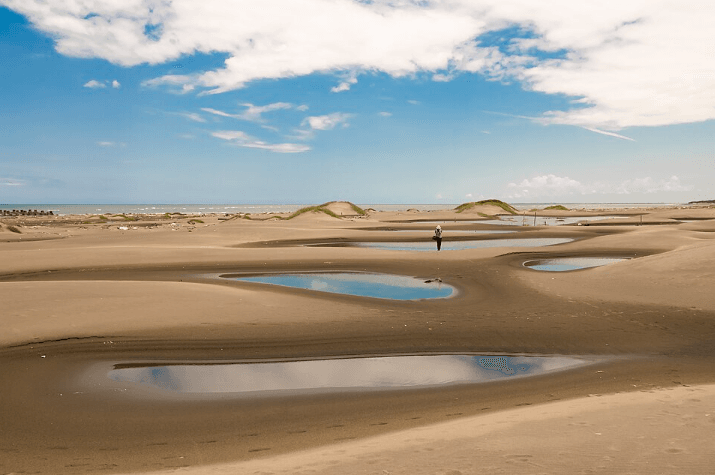
Taijiang National Park is Taiwan’s newest national park, established in 2009 to protect the extraordinary coastal wetland, lagoon, and salt flat ecosystems along Tainan’s northwestern coastline. The park is best known as winter habitat for the endangered black-faced spoonbill, one of the rarest migratory shorebirds in the world, and the observation platform at the park’s main wetland area draws serious birdwatchers from across Asia between October and April. But the park’s most photogenic attraction is the Jingzijiao Wapan Salt Fields, where the old crystallized salt pans have been transformed by algae and mineral deposits into a kaleidoscope of pinks, oranges, and purples that shift with the light throughout the day and at sunset turn into something truly spectacular.
16. Eternal Golden Castle (Erkunshen Battery)
.jpg)
Address: No. 3, Guangzhou Road, Anping District, Tainan City 708
The Eternal Golden Castle, built between 1874 and 1876 during the late Qing Dynasty as a coastal defense fortification, is one of the finest examples of 19th century military architecture in Taiwan and a fascinating complement to the nearby Dutch-era Anping Fort. The castle was constructed using red bricks and Western-style defensive engineering techniques, with thick cannon battlements, a moat, and a drawbridge design that reflected the Qing government’s serious concern about foreign naval threats in the wake of Japanese and Western naval incursions. The extensive restoration has preserved the original layout beautifully, and cannon installations along the battlements give a vivid sense of the fortification’s original military purpose. The surrounding moat and landscaped park area make for a pleasant stroll, and the overall scale and completeness of the site makes it one of the most impressive historic fortifications in southern Taiwan.
17. Guanziling Mud Hot Springs
Address: No. 1, Guanziling, Baihe District, Tainan City 736 (approximately 1 hour by car from central Tainan, or accessible by bus via Xinying)
Guanziling is home to one of the rarest and most unusual hot spring types in the world: natural mud hot springs where the mineral-rich water carries fine particles of volcanic clay that coat the skin in a silky, therapeutic layer said to be excellent for complexion and circulation. The springs have been famous since the Japanese colonial era, when Guanziling was designated an official hot spring resort in 1920. The “Water and Fire” attraction nearby, where natural gas and spring water emerge simultaneously from the same rocky outcrop causing flames to burn on the surface of flowing water, is one of those genuinely strange natural phenomena that sounds impossible until you see it. Various resort hotels and day-use facilities along the main hot spring street offer both communal and private soaking options at reasonable prices. In winter especially, a long soak in Guanziling’s unique muddy waters is one of the most pleasurable experiences in southern Taiwan.
18. National Museum of Taiwan Literature
.jpg)
Address: No. 1, Section 2, Zhongzheng South Road, West Central District, Tainan City 700
Housed in the magnificently preserved former Tainan State Hall from the Japanese colonial period, the National Museum of Taiwan Literature is both an architectural gem and a genuinely important cultural institution. The grand baroque building, with its sweeping colonnaded facade, red-brick exterior, and elegant interior halls, was built in 1916 and is one of the finest examples of Japanese colonial public architecture still standing in Taiwan. Inside, the museum traces the full sweep of Taiwanese literary history from indigenous oral traditions through the Qing Dynasty, the Japanese colonial period, and the KMT era to contemporary Taiwanese writing, with thoughtfully designed exhibitions in both Chinese and English. The building’s exterior is beautiful enough to justify a visit even from those with little interest in literature, and the interior spaces have been adapted for museum use with impressive care for the original architecture.
19. Luerhmen Mazu Temple (Luermen Tianhou Temple)

Address: No. 16, Luermen Road, Annan District, Tainan City 709
The Luerhmen Mazu Temple is one of the largest and most visually spectacular temple complexes in all of Taiwan, a vast, colorful, multi-tiered religious fortress that rises dramatically from the flat coastal plains of northern Tainan in a way that genuinely stops you in your tracks as you approach. The temple is dedicated to Mazu, the goddess of the sea, and holds deep historical significance as the site where Koxinga’s forces are said to have landed when they arrived to expel the Dutch. The main temple structure is enormous, guarded at the entrance by two towering demon statues in the parking area and surrounded by a moat with ornamental bridges. The interior halls are filled with intricate carvings, gilded altarpieces, and a constant atmosphere of devotion and incense smoke. Getting here requires some planning as it is not easily accessible by public transit, but it is absolutely worth the effort.
20. Yanshui Beehive Fireworks Festival

Address: Yanshui District, Tainan City 737 (approximately 30 minutes by car from central Tainan; festival held on the 15th day of the Lunar New Year)
While this entry is an event rather than a static attraction, the Yanshui Beehive Fireworks Festival deserves a place on any Tainan list because it is one of the most extraordinary and genuinely intense cultural experiences in all of Taiwan. Every year on the 15th day of the Lunar New Year, the small town of Yanshui becomes ground zero for one of the most unique fireworks festivals in the world. Massive multi-tiered towers called “beehives” are loaded with hundreds of thousands of bottle rockets, and when they are ignited they fire simultaneously in all directions into the crowd. Participants wear full-body protective gear and motorcycle helmets, and they press into the spray of rockets on purpose, believing the experience brings good luck and wards off bad fortune. The noise, the heat, the smoke, and the sheer adrenaline of standing in a storm of fireworks is something you will never forget. Even if you visit Tainan outside of the festival period, knowing this event happens here adds a layer to the city’s character that is quintessentially Taiwanese.
Tainan does not try to impress you. It does not need to. The city simply exists, confidently and completely, in a way that very few places in the world manage. Centuries of history layer themselves quietly across the streetscape, the temples are living places of genuine devotion rather than tourist showcases, and the food culture is so deeply embedded in daily life here that eating your way through the city feels less like tourism and more like participation.
The top tourist spots in Tainan covered in this guide are the starting point for understanding why this city has such a devoted following among travelers who seek depth over spectacle. But the real Tainan reveals itself slowly, through unhurried afternoons in temple courtyards, through bowls of soup eaten at a plastic table on a narrow lane, through the discovery of an alley you did not know existed that turns out to be exactly where you wanted to be.
Plan at least three days. Slow down more than you think you need to. And eat everything.
Found your next Taiwan destination? Save this guide and share it with anyone who thinks they know Taiwan but has not yet been to Tainan.
Leave a Reply