
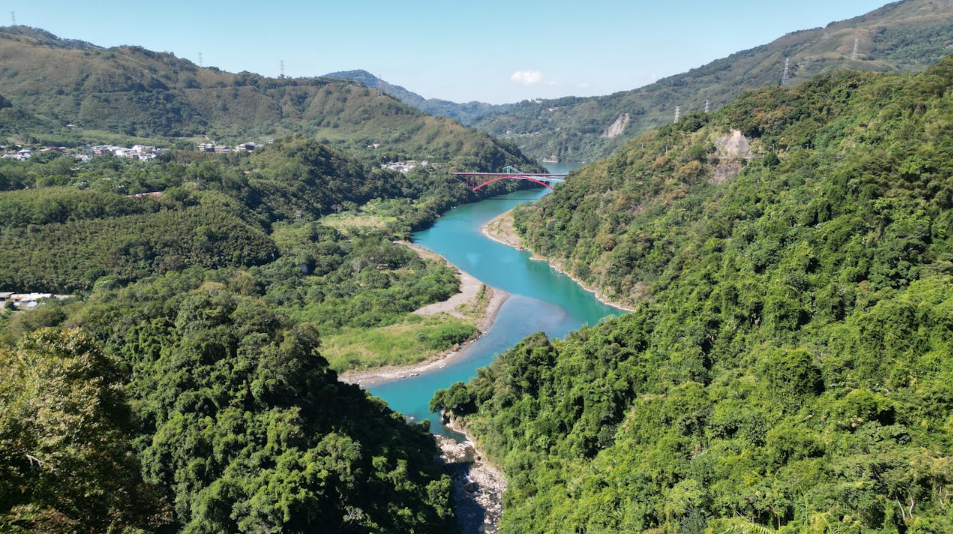
Most travelers know Taoyuan as the place where their plane lands before they rush off to Taipei. And honestly? That is a shame. Because Taoyuan, Taiwan’s “Peach Garden”, is one of the most diverse and underexplored cities on the island, with enough mountains, reservoirs, old streets, waterfalls, cultural landmarks, and indigenous heritage to fill an entire trip on its own.
The city stretches from a flat coastal plateau all the way up into the rugged peaks of the Northern Cross-Island Highway, where ancient cypress trees, spectacular waterfalls, and traditional Atayal tribal villages sit waiting in the mist. Down in the lowlands, you will find beautifully preserved Japanese-era architecture, one of Taiwan’s most fascinating historical controversies at Cihu Mausoleum, and a nightlife and food scene that locals are quietly very proud of. If you have been skipping Taoyuan on your Taiwan itinerary, consider this your sign to stop. The top tourist spots in Taoyuan are ready for you.
1. Daxi Old Street

Daxi Old Street is consistently ranked as Taoyuan’s most popular tourist attraction, and the moment you arrive, you will understand why. This beautifully preserved Baroque-style commercial street in the Daxi District is lined with ornate red-brick shophouses from the Japanese colonial era, their elaborate facades decorated with traditional Taiwanese motifs and western architectural flourishes that create one of the most photogenic streetscapes in northern Taiwan. The street is famous above all for its tofu products — dried tofu, tofu pudding (douhua), and marinated bean curd that locals have been perfecting for generations. Wander through on a weekend when the market is in full swing, pick up a bag of peanut candy or a packet of dried tofu as a souvenir, and take your time with the architecture. It is best visited during the day when the old facades catch the light beautifully.
2. Cihu Mausoleum and Chiang Kai-shek Statue Park

Few attractions in Taiwan provoke as much thought, debate, and fascination as the Cihu Mausoleum complex just south of Daxi. Set beside a peaceful lake surrounded by forested hills, this is the resting place of former ROC President Chiang Kai-shek, whose body lies in a black marble sarcophagus inside a traditionally styled mausoleum building complete with an hourly changing-of-the-guard ceremony. What makes Cihu genuinely extraordinary, though, is the adjacent Statue Park — a sprawling open-air collection of hundreds of Chiang Kai-shek statues that were removed from public spaces across Taiwan as attitudes toward his legacy have shifted over the decades. Seeing all of those statues gathered together in one place, in every size and pose imaginable, is surreal, thought-provoking, and completely unlike anything else you will encounter in Taiwan.
3. Xiao Wulai Scenic Area and Skywalk

Deep in the mountains of Fuxing District, the Xiao Wulai Scenic Area is one of Taoyuan’s most spectacular natural destinations and a must for anyone who loves waterfalls, canyons, and that particular thrill of standing on glass over a very long drop. The centerpiece of the area is the Xiao Wulai Waterfall, a dramatic three-tiered cascade where the middle section alone plunges about 50 meters down through a narrow basalt gorge. The glass-bottomed Xiao Wulai Skywalk, Taiwan’s first of its kind, projects 11 meters out over the valley cliff face and positions you directly above the falls at a height of 70 meters — your feet dangling over nothing but glass and open air. The name “Wulai” comes from the Atayal indigenous language meaning “warm spring water,” and the surrounding area is rich in Atayal culture and heritage as well.
4. Shimen Reservoir Scenic Area

Shimen Reservoir is one of the largest dams in Taiwan, providing water for approximately three million people in the greater Taipei area, and the scenic area surrounding it is a wonderful and often overlooked destination for a half-day excursion from the city. The reservoir’s calm blue-green waters are framed by low rolling mountains, and the dam structure itself is genuinely impressive in scale. Walking along the top of the dam gives you sweeping views across the reservoir on one side and down the dramatic concrete spillway on the other. The surrounding parklands have picnic areas, cycling paths, a small amusement area popular with families, and several restaurants serving reservoir fish dishes and local Hakka cuisine. Cherry blossoms bloom along the access roads in spring, adding an extra layer of beauty to what is already a very scenic setting.
5. Lala Mountain Nature Reserve
.jpg)
For hikers, nature lovers, and anyone who wants to feel genuinely humbled by the age of the natural world, Lala Mountain is one of northern Taiwan’s most extraordinary destinations. Located at an elevation of over 2,000 meters at the junction of Fuxing District in Taoyuan and Wulai District in New Taipei City, the mountain is home to one of Taiwan’s most remarkable ancient forest ecosystems — including red cypress trees that are between 500 and 3,000 years old. The Giant Tree Trail, a 3.7-kilometer path winding through the forest, brings you face to face with 24 of these colossal ancient trees, their trunks so wide that a group of people cannot link hands around them. The air up here is clean, cool, and heavy with the scent of cypress resin. It takes some effort to get here, but standing among trees that were alive during the Tang Dynasty is the kind of experience that genuinely changes your perspective.
6. Taoyuan Martyrs’ Shrine and Shinto Cultural Park

One of the best-preserved examples of Japanese Shinto shrine architecture in Taiwan, the Taoyuan Martyrs’ Shrine is a hidden gem that rewards visitors who seek it out. Originally built during the Japanese colonial period, the shrine was later converted into a martyrs’ memorial after the retrocession of Taiwan in 1945, but its authentic Shinto architectural bones remain beautifully intact — including its distinctive vermilion torii gates, stone lanterns, and sweeping forested grounds. The complex has been carefully restored in recent years and now serves as a cultural park that honors both its Japanese heritage and its Taiwanese military history. The surrounding Hutoushan (Tiger’s Head Mountain) Park offers additional walking trails and city views, with two colorful temples tucked into the hillside that are lovely to explore on the same visit.
7. Xpark Aquarium

Opened in 2020 in the Zhongli District, Xpark is one of the most impressively designed aquariums in Taiwan and a standout attraction for families and marine life enthusiasts. The facility was developed in partnership with Yokohama Hakkeijima Sea Paradise in Japan, and the production quality shows — from the enormous main tank that puts you face-to-face with schools of fish and sharks, to immersive themed zones featuring penguins, sea otters, jellyfish, and deep-sea creatures. The design throughout is sleek and modern, with excellent lighting and thoughtful exhibits that both entertain and educate. The rooftop observation area adds a nice bonus view of the surrounding cityscape.
8. Window on China Theme Park

Window on China Theme Park is one of Taiwan’s most distinctive and quirky family attractions, and it has been delighting visitors of all ages since it first opened. The park is essentially a miniature world, featuring painstakingly detailed scale models of iconic landmarks from across China and Taiwan — including miniature versions of the Forbidden City, the Great Wall, Sun Moon Lake, Taipei 101, and dozens more — all arranged across beautifully landscaped grounds that make for a surprisingly immersive stroll. Beyond the miniature displays, the park also offers a range of amusement rides, outdoor shows, and interactive experiences that make it a genuinely full-day outing for families. It is exactly the kind of charming, slightly old-school attraction that Taiwan does so well, combining education with entertainment in a way that feels effortlessly fun.
9. Dongyanshan Forest Recreation Area
Wrapped in a 300-hectare cedar forest inside the foothills of Fuxing District, Dongyanshan Forest Recreation Area is a wonderful escape into nature that remains refreshingly crowd-free even on weekends. The highest point in the park, Dongyan Mountain, rises to 1,212 meters and rewards those who hike to the summit with panoramic views across Taoyuan’s valleys, the distant Tamsui River basin, and, on clear days, the glittering nightscape of the city far below. The trails through the cedar and cypress forest are well-maintained, fragrant, and peaceful — this is the kind of hiking where the journey itself is the reward, not just the destination. Spring brings a carpet of wildflowers along the lower trails, while the higher elevation keeps the temperature cool and comfortable even in the middle of summer.
10. Daxi Blooming Oasis (Ta Shee Blooming Oasis)

Just outside the Daxi town center, the Blooming Oasis is a sprawling flower garden and farm that has become one of Taoyuan’s most visually spectacular seasonal destinations. The farm plants its fields in rotating flower crops throughout the year, so there is almost always something in bloom — whether it is sunflowers stretching across the hillsides in summer, cosmos and zinnias in autumn, or tulips and cherry blossoms in spring. The garden is especially popular with photographers and couples, and the carefully arranged flower patterns visible from the elevated viewing platforms make for absolutely stunning images. There is also a small café, local produce market, and workshop area on site. It is a relaxed and beautiful outing that pairs perfectly with a visit to Daxi Old Street just nearby.
11. Longgang Mosque

The Longgang Mosque in Zhongli is the largest mosque in northern Taiwan and a significant cultural and architectural landmark that often surprises visitors who encounter it for the first time. Built in 1957 and expanded over the decades, the mosque’s Middle Eastern-influenced domes and minarets stand in beautiful contrast to the surrounding Taiwanese cityscape. Zhongli has long been home to one of Taiwan’s largest communities of Southeast Asian migrant workers and Muslim residents — giving the district a wonderfully multicultural character that you can taste in the surrounding streets, where Indonesian, Thai, Malaysian, and Halal Taiwanese restaurants cluster around the mosque area. The mosque welcomes respectful visitors outside of prayer times, and the surrounding neighborhood makes for a fascinating and delicious cultural wander.
12. Jiaobanshan (Jiaoban Mountain) Park and Chiang Kai-shek Residence

Nestled above the Shimen Reservoir with sweeping views of the valley below, Jiaobanshan has a layered identity that makes it more fascinating than its sleepy mountain park exterior might suggest. The site served as a mountain retreat and official residence for Chiang Kai-shek during his presidency, and the preserved buildings, war preparedness tunnel, and surrounding sculpture park give visitors a genuinely intimate look at a chapter of Taiwan’s 20th century political history. A 100-meter underground military tunnel runs through the hillside, its walls painted with striking 3D murals depicting wartime scenes. The park is also beautiful in its own right — plum blossoms bloom along the trails in winter, and the views of Shimen Reservoir’s emerald waters from the hilltop pavilion are among the most scenic in Taoyuan. It pairs naturally with a Shimen Reservoir visit on the same day.
13. Hutoushan Park (Tiger’s Head Mountain)
.jpg)
Hutoushan, or Tiger’s Head Mountain, is Taoyuan District’s beloved local hilltop park and one of the most accessible green escapes in the city for residents and visitors alike. The park sits on a small forested ridge overlooking Taoyuan city and is home to two colorful and atmospheric temples — Hukuei Temple and Guangfu Temple — whose sweeping multi-tiered architecture and vibrant religious carvings are worth a visit even if you are not making a special hiking trip. Trails wind gently up through the trees to several viewpoints with city panoramas, and the park is a popular spot for morning tai chi, evening walks, and weekend family picnics. It is the kind of local park that tells you a lot about how Taiwanese people actually live and spend their leisure time, which in itself is a travel experience worth having.
14. Lala Mountain Atayal Culture and Hakka Villages (Fuxing District)

Beyond the ancient trees, the broader Fuxing District that encompasses Lala Mountain is one of the most culturally rich areas of Taoyuan, blending indigenous Atayal traditions with Hakka heritage in a mountain landscape that feels worlds apart from the urban city below. Small indigenous communities like Piyaway (home to the Atayal tribe) offer glimpses into traditional ways of life, including weaving, millet cultivation, and the distinctive geometric patterns of Atayal textile art. The TUBA Church (Jiiguo Church), an old Christian mission building built by indigenous hands, is an unusual and moving piece of architecture tucked into the mountain valley. The district’s winding Provincial Highway 7 — the Northern Cross-Island Highway — is also a spectacular scenic drive in itself, winding through river gorges and forested ridges with stunning vistas at almost every turn.
15. Sanmin Bat Cave

For something genuinely offbeat and memorable, the Sanmin Bat Cave (Sanmin Biandongsha) in Fuxing District is one of Taoyuan’s strangest and most fascinating natural attractions. A large cave system carved into the mountain hosts a colony of thousands of bats that pour out of the entrance in a remarkable dark cloud at dusk — a natural spectacle that draws wildlife watchers and curious travelers who have heard about it through word of mouth. The surrounding forested valley is scenic and peaceful during the day, with a small stream and local food stalls serving Atayal specialties nearby. It is best combined with a visit to the Xiao Wulai area or Lala Mountain on the same mountain highway road trip.
16. Xucuogang Coastal Wetlands

On the completely opposite end of Taoyuan’s geography from the mountain attractions, the Xucuogang Wetlands on the city’s northwestern coastline offer a beautiful and serene escape that most visitors never find. The wetland area sits very close to Taoyuan International Airport and is characterized by sweeping coastal grasslands, tidal mudflats, and a cluster of modern wind turbines spinning above the shoreline. It is one of the best places in northern Taiwan to watch the sunset — the wide flat horizon, the reflective water channels, and the silhouetted turbines create an almost cinematic scene in the golden hour. The area is a protected natural reserve and an important habitat for migratory birds, making it a rewarding stop for birdwatchers as well as photographers. Think of it as Taoyuan’s answer to the famous Gaomei Wetlands in Taichung.
17. Zhongli Night Market (Zhongyuan Night Market)

Taoyuan has its own thriving night market culture, and the Zhongyuan Night Market in Zhongli is the one you need to add to your list. Running along a stretch of road in the heart of the Zhongli District, the market transforms every evening into a buzzing corridor of food stalls, fashion vendors, carnival games, and the general joyful chaos that makes Taiwanese night markets so addictive. What sets Zhongli’s market apart is its notable Southeast Asian influence, reflecting the large Indonesian and other migrant worker communities in the area — you will find authentic satay, nasi lemak, durian treats, and other Southeast Asian snacks alongside classic Taiwanese offerings like oyster vermicelli, scallion pancakes, and stinky tofu. For Filipino travelers, this multicultural mix will feel especially familiar and welcoming.
18. Yong’an and Zhuwei Fishing Harbors

Taoyuan’s coastline does not get much tourism attention, which means that the city’s fishing harbors remain refreshingly authentic and crowd-free compared to busier seafood destinations around Taiwan. Yongan Fishing Harbor in the south and Zhuwei Fishing Harbor to the north are both active working harbors where fishing fleets come and go, and the surrounding seafood restaurants serve the freshest possible catches at very reasonable prices. Yongan is particularly famous for its seaweed production and has a dedicated seaweed festival each spring. The harbor area at sunset, with fishing boats bobbing on the water and the last light catching the ocean, is a genuinely lovely scene. These are the kinds of authentic, local experiences that make a trip feel real rather than just staged for tourists.
19. Gloria Outlets (Taoyuan)

If a little therapeutic shopping is on your travel agenda, Gloria Outlets near Taoyuan’s High Speed Rail station is worth knowing about. Taiwan’s first open-air outlet shopping village, this landscaped complex features over 200 stores offering international brands at significant discounts in a pleasant, village-style outdoor setting with gardens, water features, and plenty of dining options scattered throughout. The combination of quality shopping, comfortable design, and easy HSR access makes it a popular stop for both Taiwanese shoppers and international visitors — especially those with a few hours to spare between transport connections. It is a different side of Taoyuan than the waterfalls and temples, but sometimes a relaxed afternoon of browsing and good food is exactly the kind of travel experience you need.
20. Guanyin Sand Dune Coastal Park
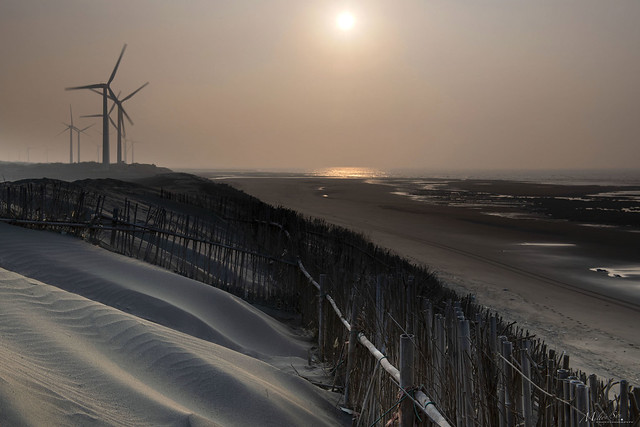
One of Taoyuan’s most unexpected and photogenic natural features, the coastal sand dunes near Guanyin District have earned the nickname “Little Vietnam Mui Ne” for their rolling grassy dune landscape that feels completely unlike anything else in northern Taiwan. The dune area along Taoyuan’s shoreline is the most expansive and well-developed coastal dune system on the island, and the sweeping views across the grass-covered hills to the Taiwan Strait beyond create a strikingly beautiful and unusual scene. At sunset, the light turns the dunes golden and the ocean glitters on the horizon — it is one of those quiet, surprising moments that travel in Taiwan delivers when you least expect it. The area is also home to wind farms and a long coastal cycling path that makes for a wonderful low-key afternoon ride.
Taoyuan has been hiding in plain sight for too long. Every traveler who passes through the airport and rushes on to Taipei is missing a city that is quietly one of Taiwan’s most interesting and most varied destinations — from ancient mountain forests and glass skywalks above rushing waterfalls, to historically loaded mausoleums, coastal wetlands at golden hour, and night markets that taste like Southeast Asia and Taiwan rolled into one.
The top tourist spots in Taoyuan covered in this guide are a starting point, but the real reward of visiting this city is discovering how many different versions of Taiwan exist within its borders. Give Taoyuan a day. Give it a weekend. Give it the time it deserves, and it will give you back something genuinely unexpected.
Taiwan’s Peach Garden is blooming. Go see it for yourself.
Did this guide help you plan your Taoyuan trip? Save it, share it, and tag us when you release that sky lantern or stand on that glass skywalk!
Leave a Reply