
We didn’t discover Marikina. In a way, it discovered us first. This small city in Metro Manila holds a big place in our story. It’s where Dee and I got married. It’s where we’ve eaten the same burgers for years. And now, we visited as a family to the place that already means something to us.
Marikina is famously known as the “Shoe Capital of the Philippines”, and yes, we’ll get to the shoes. But there’s more to this city than footwear. For a kid-friendly day trip, a half day is honestly enough to cover the main highlights. Everything is close together, the streets are clean, and the pace is easy. This is exactly what you want when you’re traveling with a child.
Here’s how our day in Marikina went, and what I think is worth adding to your Marikina itinerary.
Our Lady of the Abandoned Parish (OLAP)
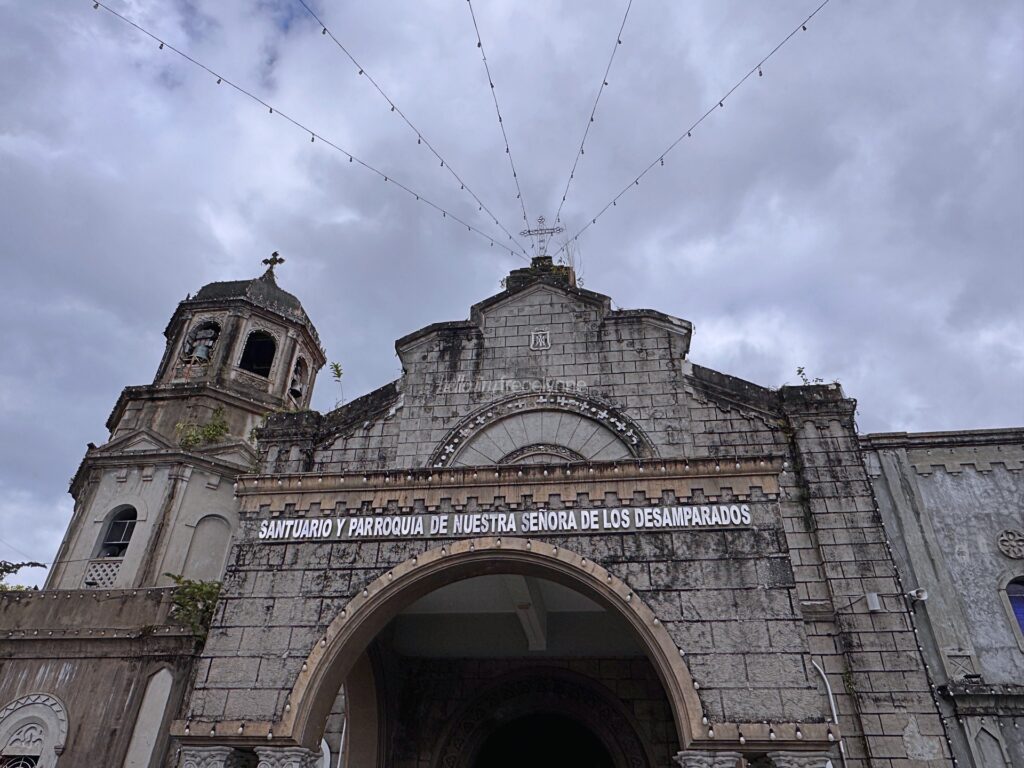
This is where Dee and I got married, and from the moment I first saw it, I was completely in love with this church.
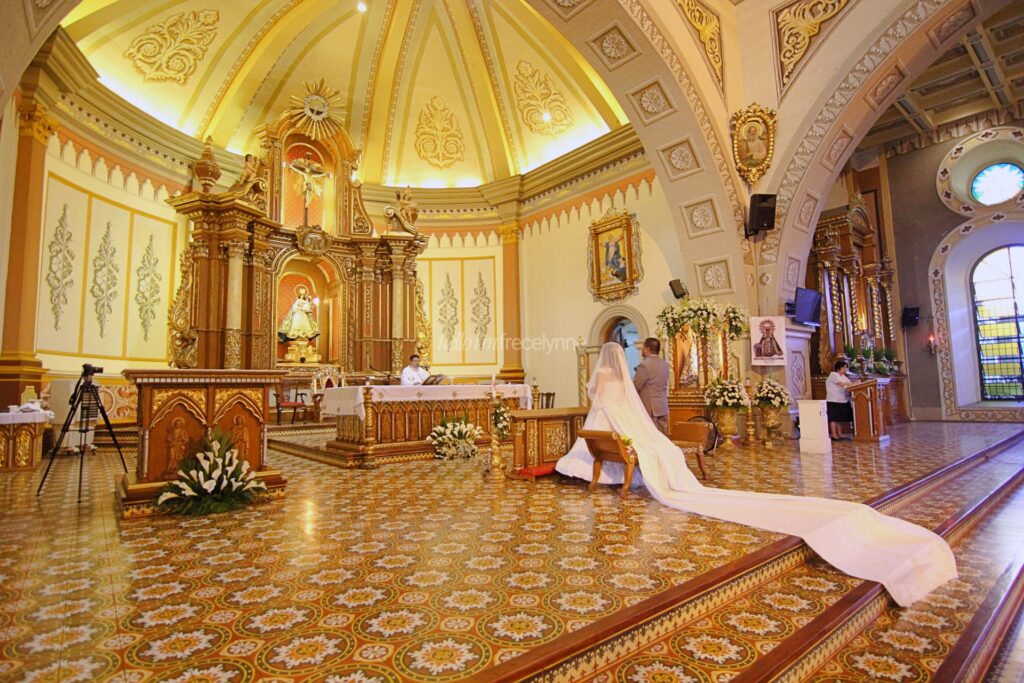
Our Lady of the Abandoned, also known as Nuestra Señora de los Desamparados, was built by Augustinians in 1700. It survived two earthquakes and a fire. The church houses an image of the Virgin Mary that appeared in 1902, which Pope Benedict XVI venerated as miraculous in 2005.
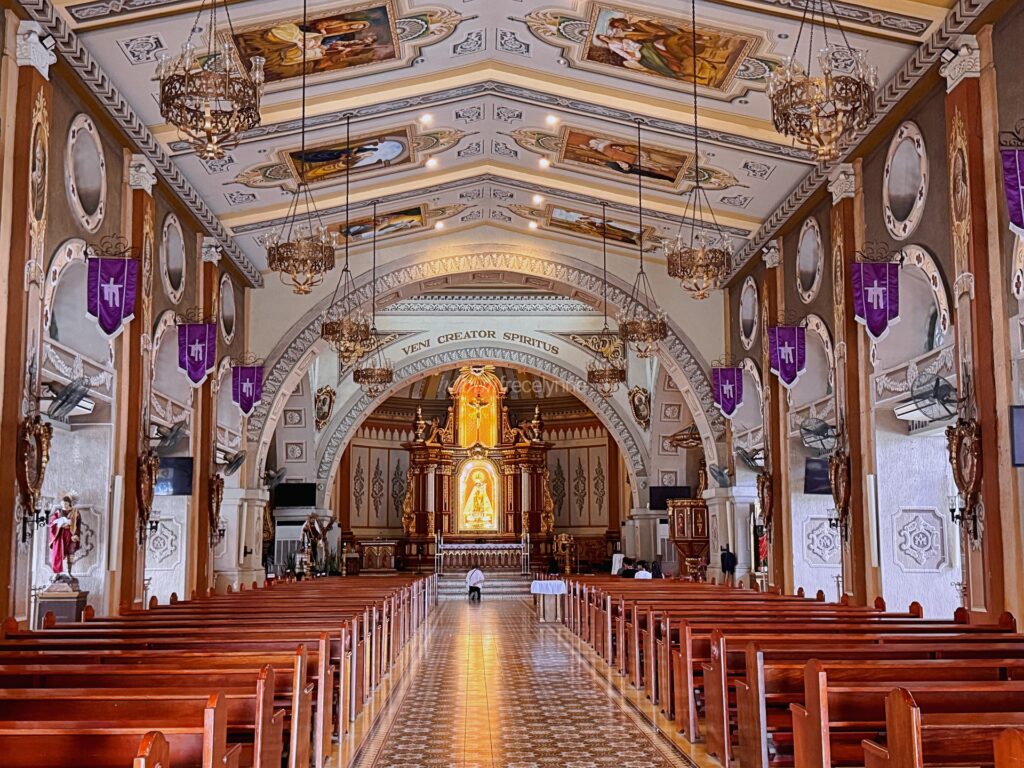
The architecture is traditional, with segmental arches framing the crossing and a dome over the altar. What I love most is the interior when the chandeliers are on. They fill the hall with a soft yellow glow that makes the whole space feel warm and reverent.
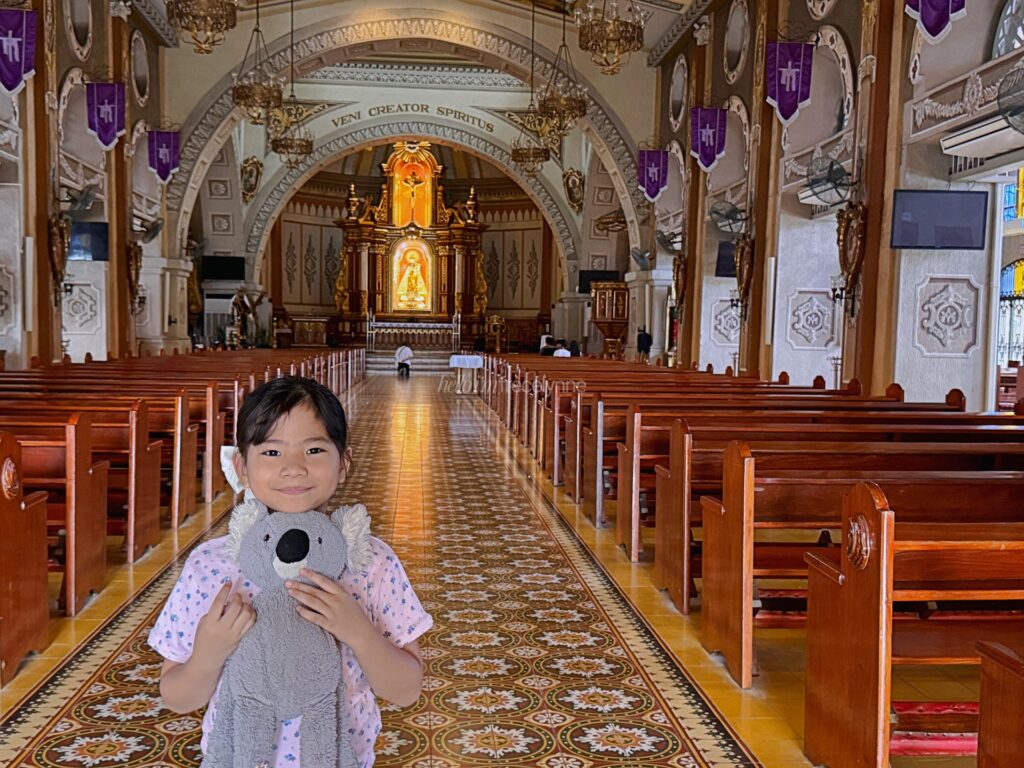
Coming back here with Audrey felt different. We walked her through what the space meant to us, and she listened quietly, looking up at the ceiling like she was trying to take it all in.
Kapitan Moy Building
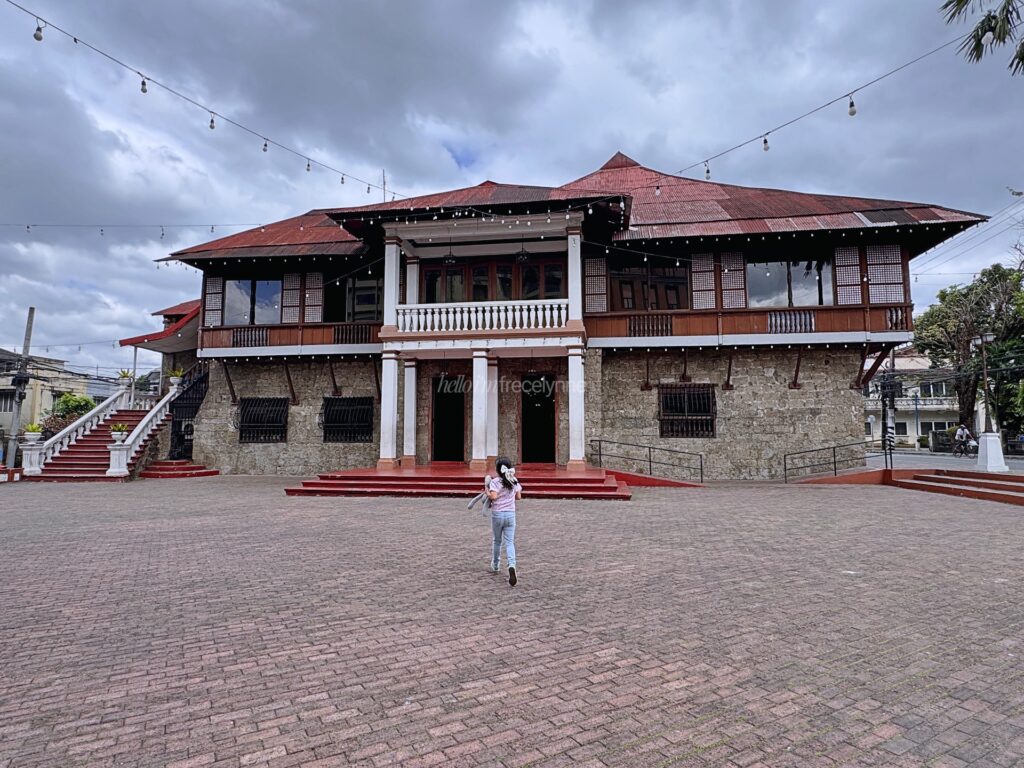
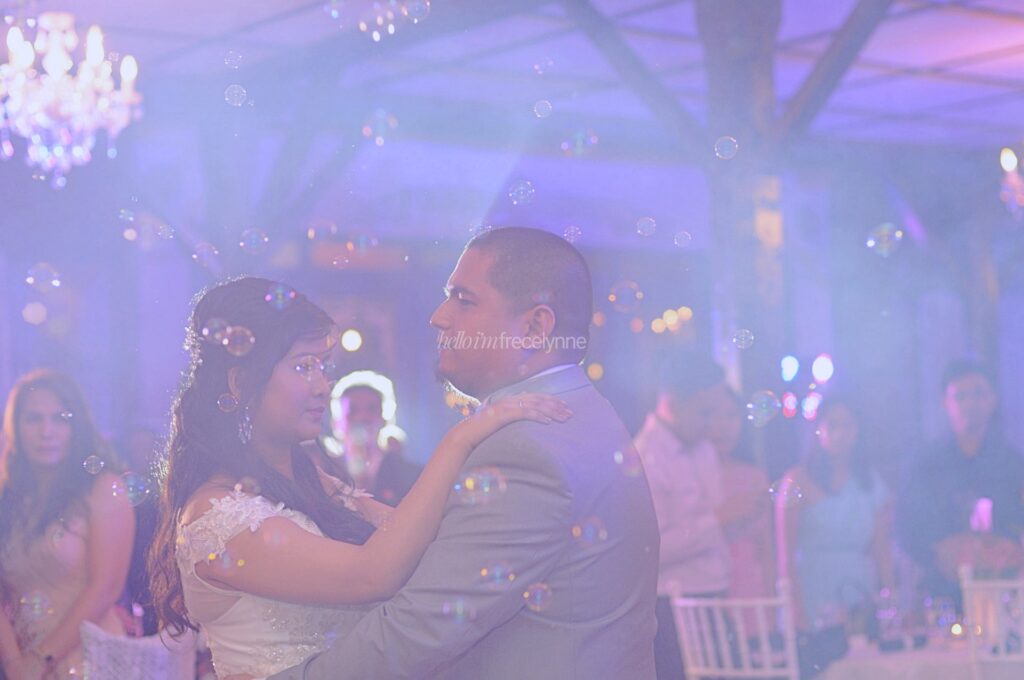
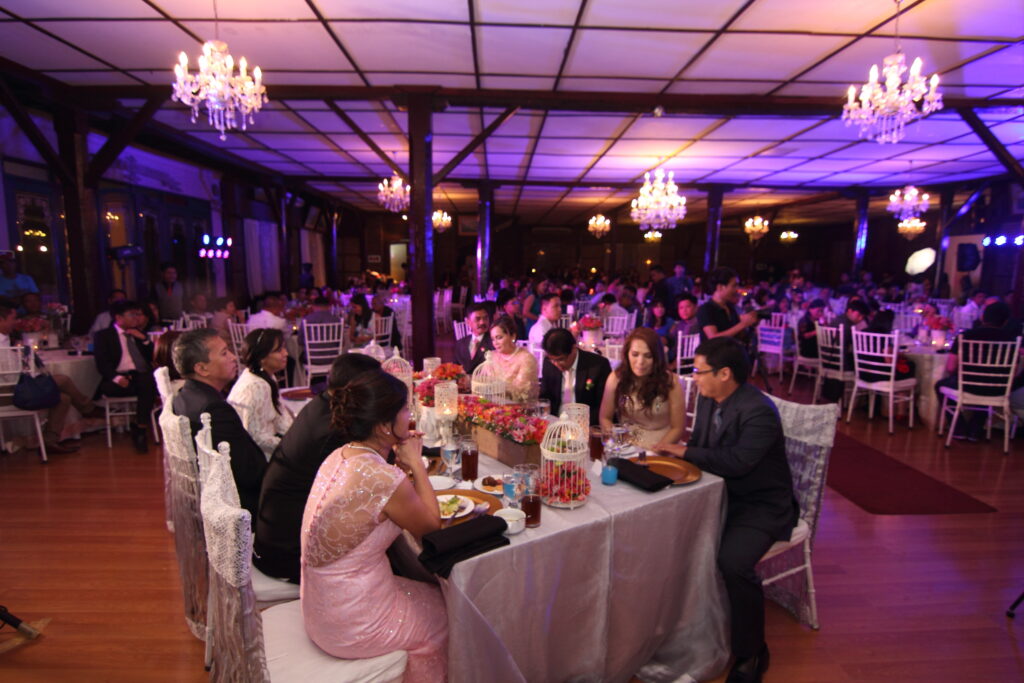
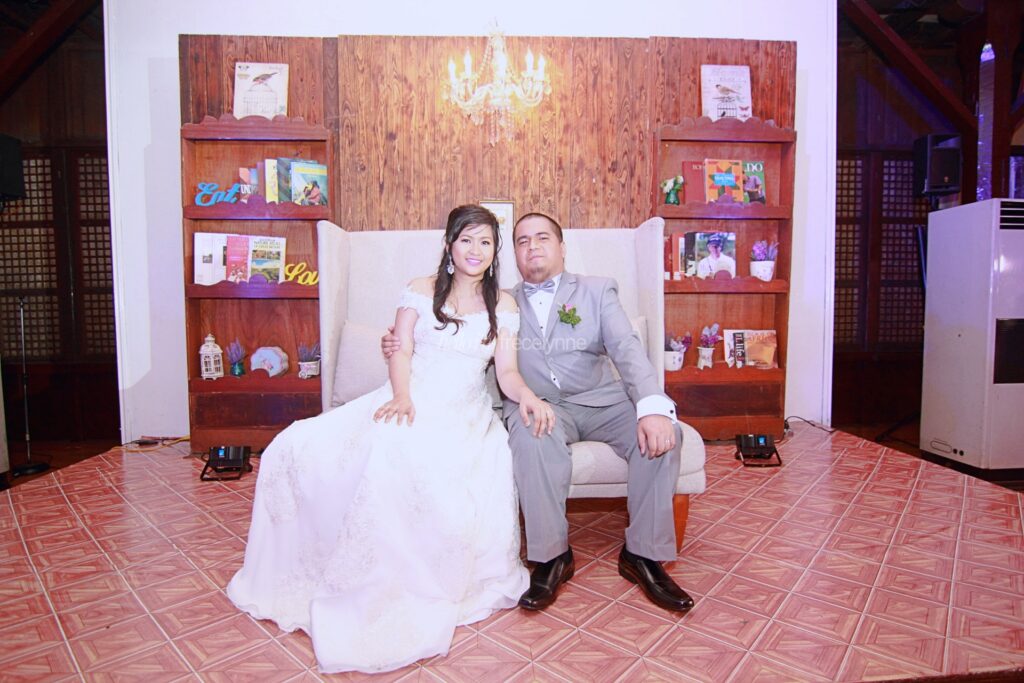
Right across OLAP is Kapitan Moy, which also happens to be the venue where we held our wedding reception. Dee and I have always had a thing for old houses, especially the Bahay na Bato, a Filipino architectural type that became popular during the Spanish colonial period.
The structure features a stone or brick base on the ground floor and a wooden upper story. The stone keeps the lower level cool and stable even during earthquakes.
The upper floor is filled with large windows that ventilate the space during hot days and can be closed when it rains.
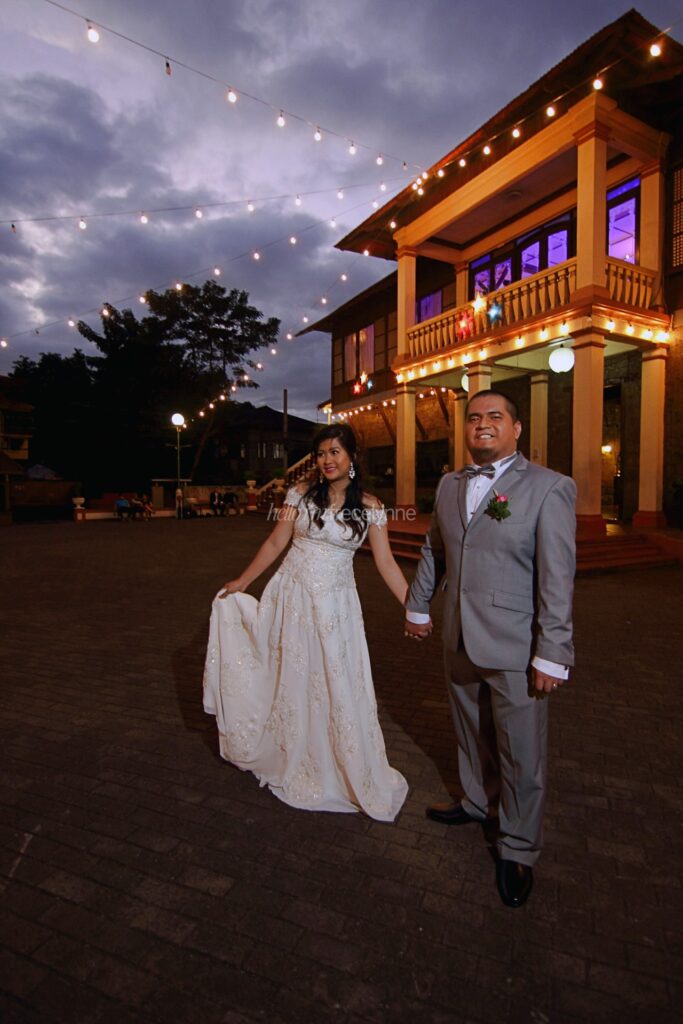
It’s one of those building styles that makes you realize how thoughtful old Filipino design actually was.
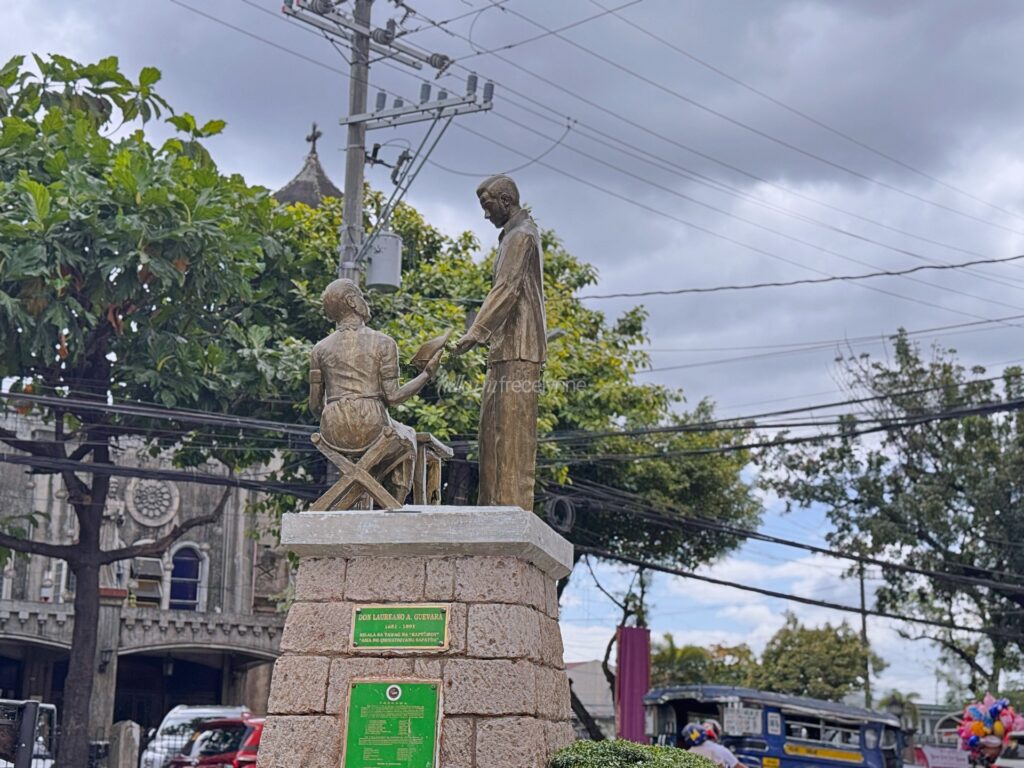
The Kapitan Moy Building, now known as the Cultural Center of Marikina, was once the ancestral home of Don Jose Guevara and Don Laureano (Kapitan Moy) Guevarra. Kapitan Moy (1851-1891) is recognized as the Father of the Marikina Shoe Industry having founded the city’s footwear trade in 1887.
Over the years, the building shifted roles. It became a home for needy residents, then a primary school from 1907 to 1955, and eventually the cultural center it is today. On April 16, 1970, it was listed as a Historic Site and Structure by the National Historical Commission of the Philippines (NHCP) and declared the First Shoe Workshop in Marikina. It is also a recognized Cultural Property of the Philippines.
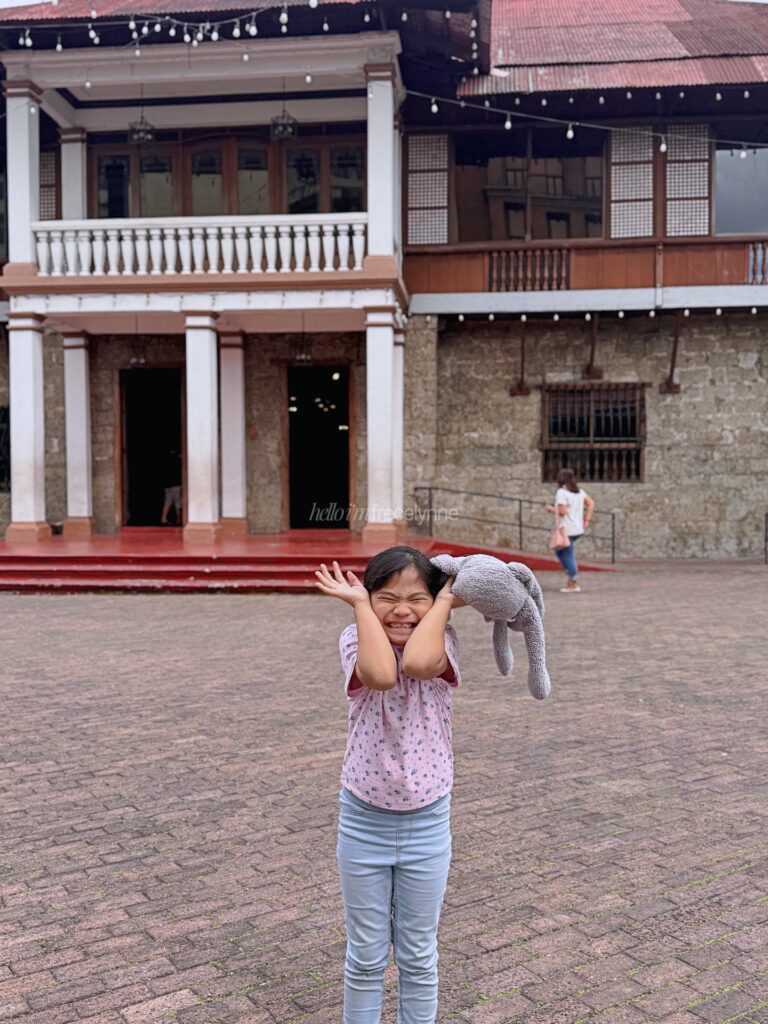
Walking Audrey through this building, knowing we had celebrated in it years before, felt full-circle in the best way.
Marikina Shoe Museum
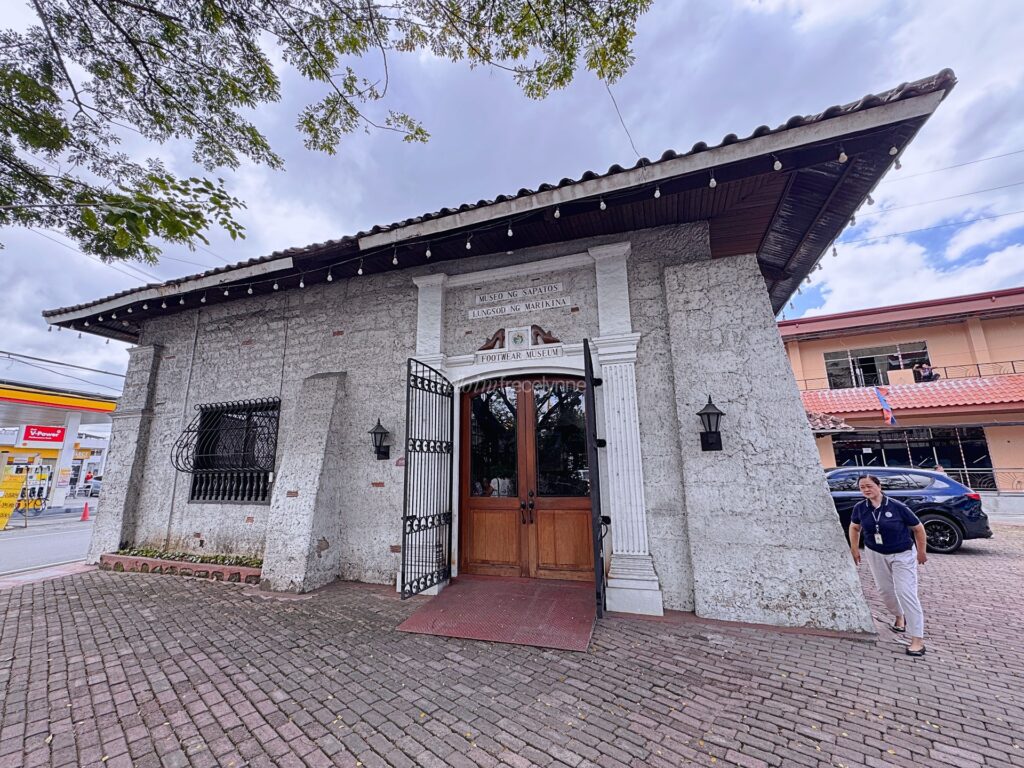
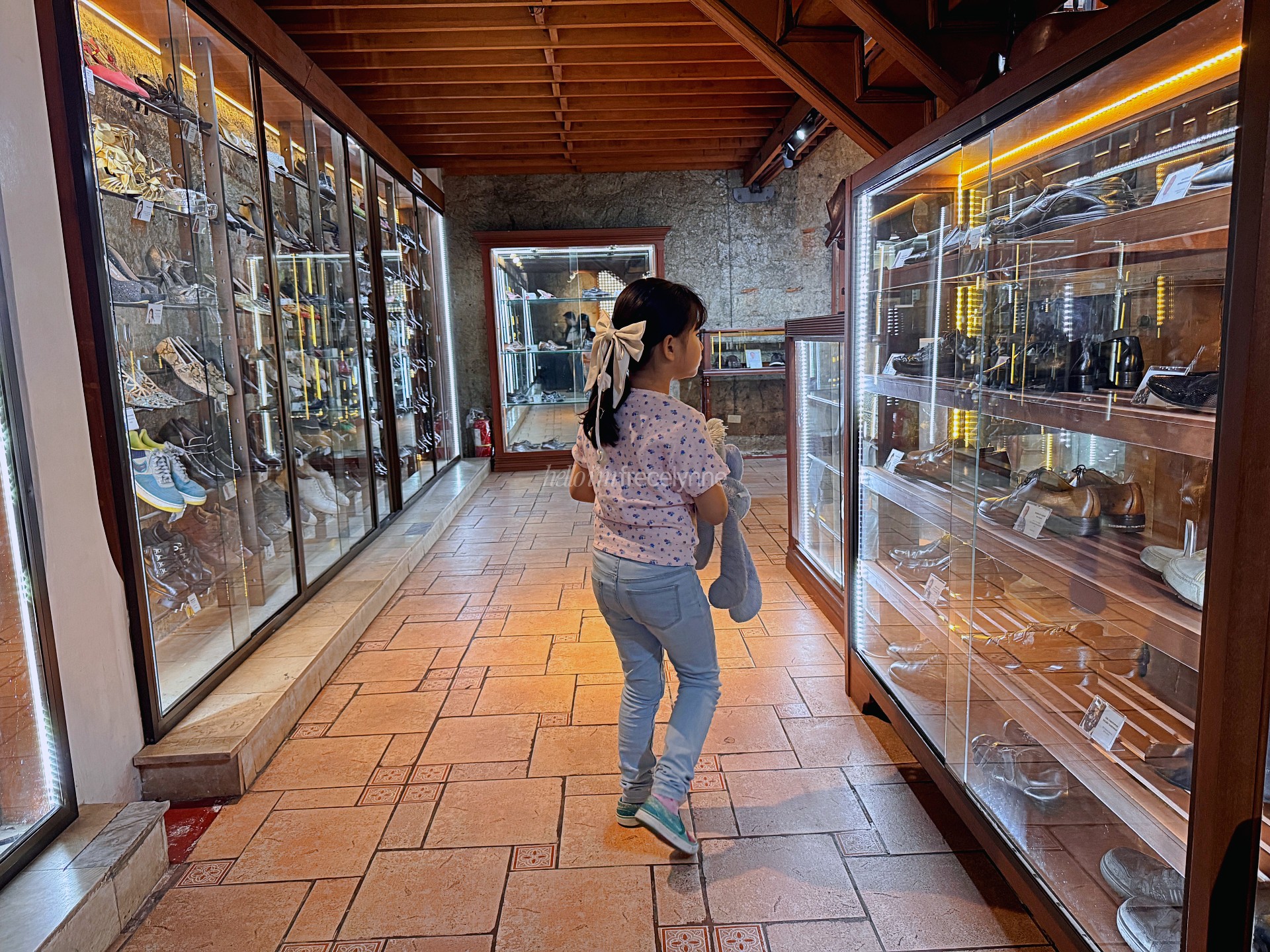
A few meters from Kapitan Moy, you’ll find the Marikina Shoe Museum and this one is a great stop for kids.
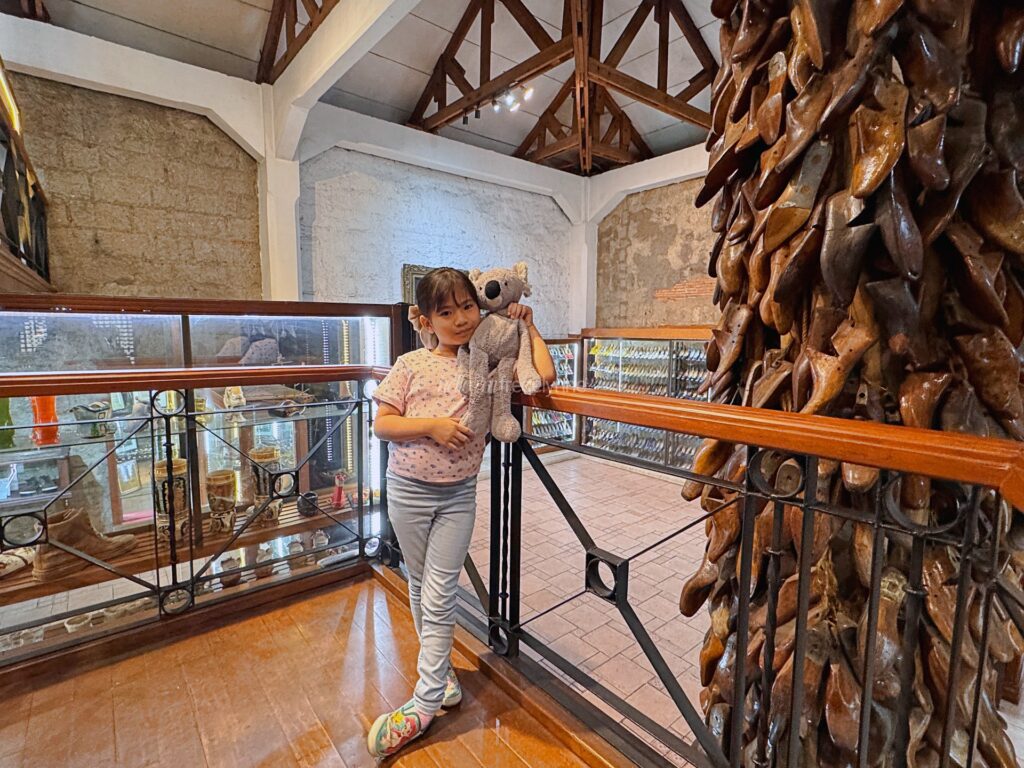
The building itself has a history beyond shoes. Built in the 19th century, it once served as a military prison. One of its most notable prisoners was General Macario Sakay, a revolutionary commander who continued fighting against American colonists long after other Philippine leaders had surrendered. In 1998, the restored building reopened as the Marikina Shoe Museum.
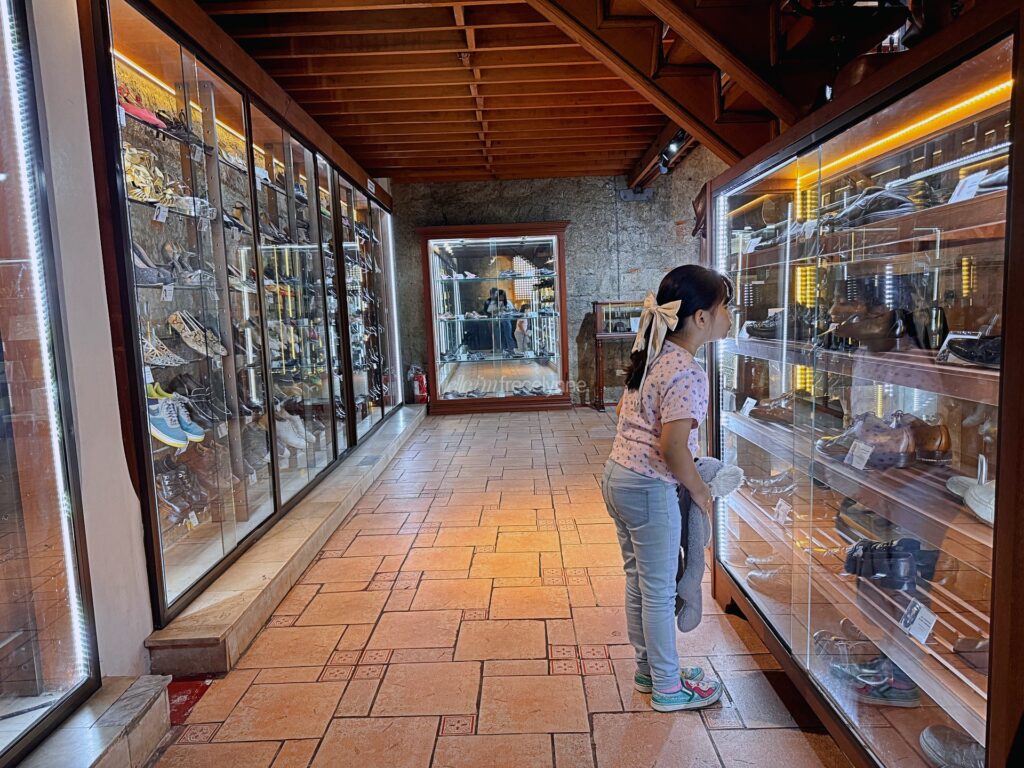
The museum holds over 1,000 pairs of shoes.
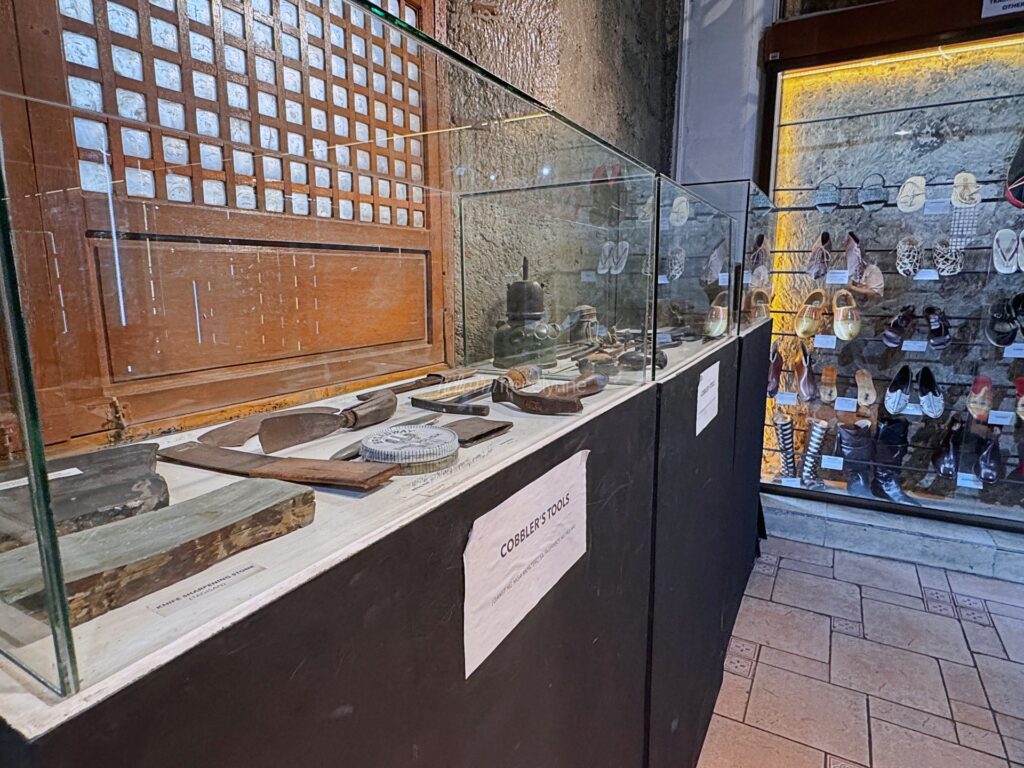
On the first floor, you’ll find tools used in upper making, and cobbler’s equipment.
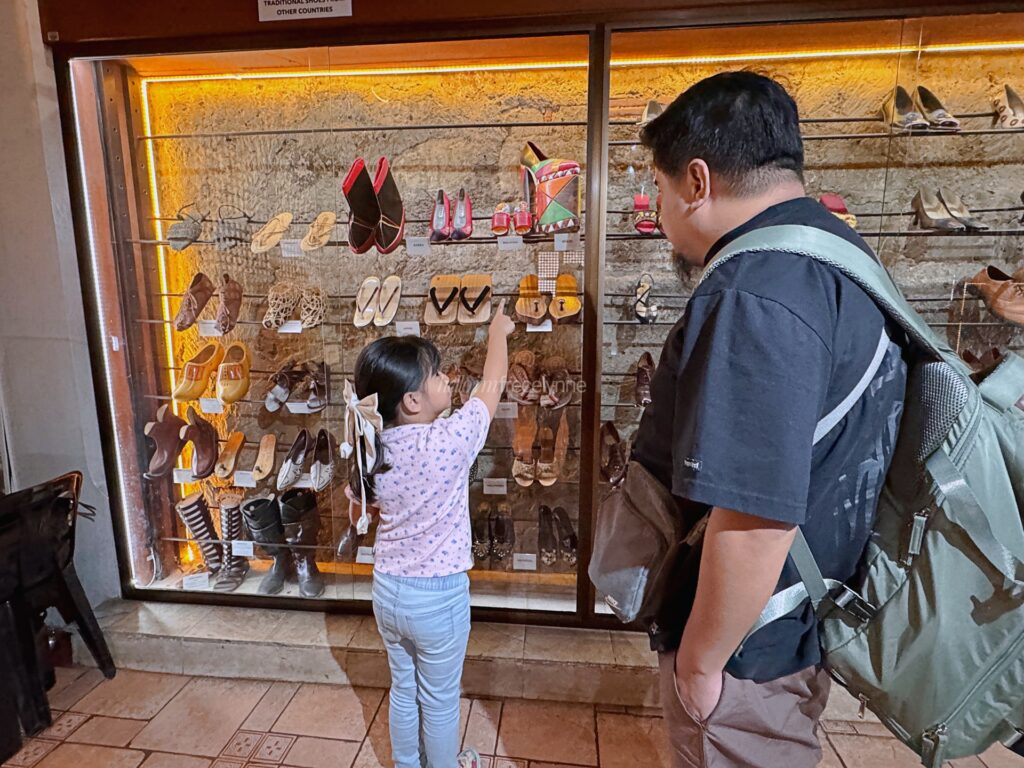
Shoes from around the world.
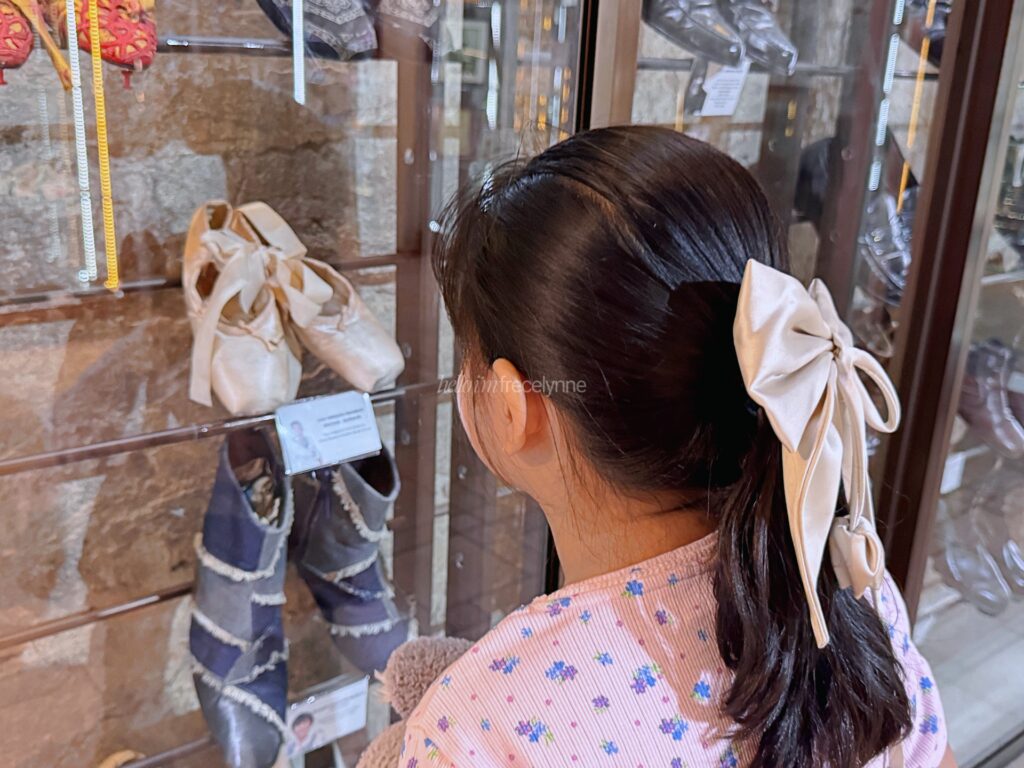
Shoes from notable Filipinos: celebrities like Marian Rivera, Angel Locsin, and Herman Moreno, and politicians like Manuel Roxas and Senator Miriam Santiago.
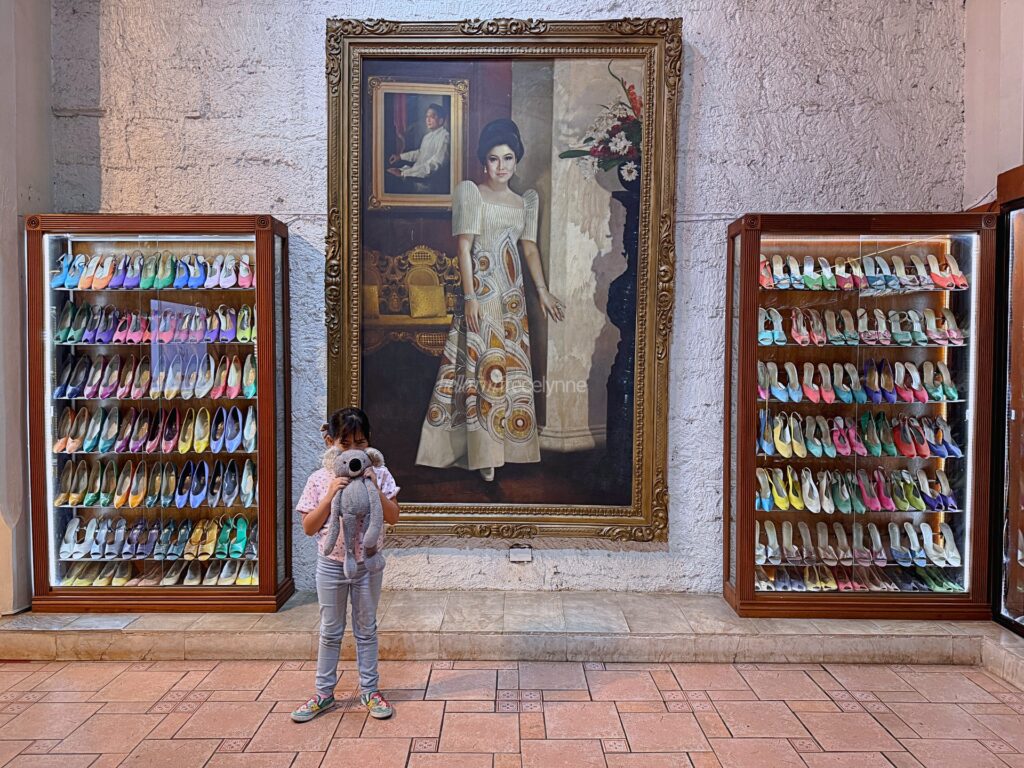
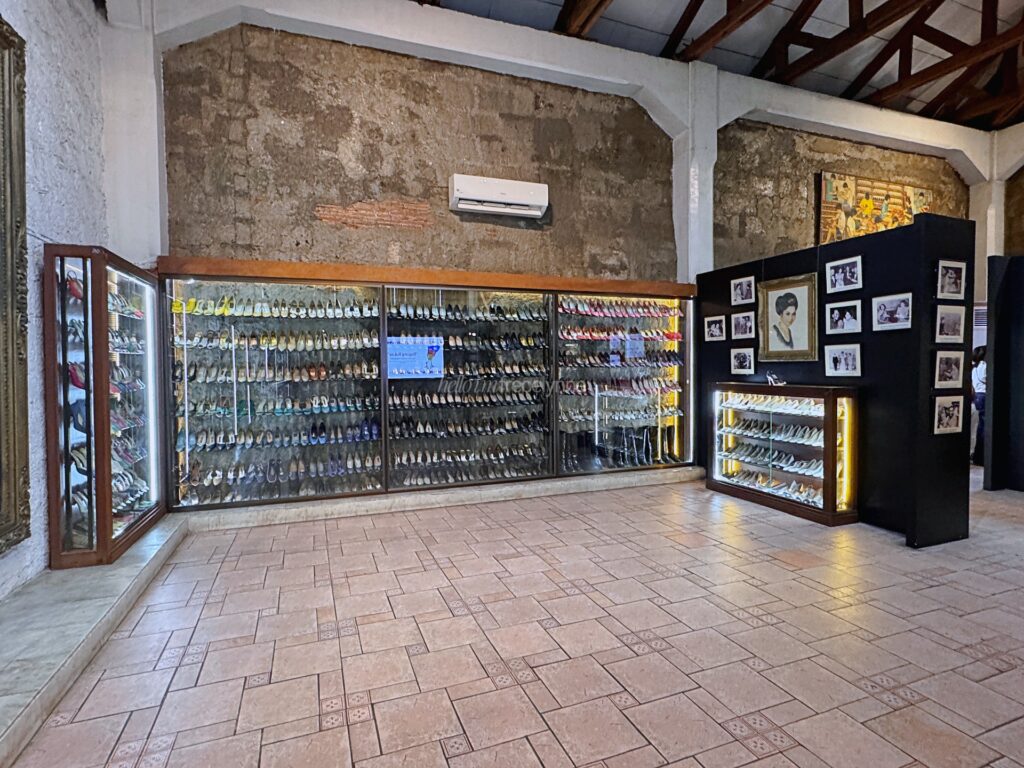
The collection also includes former First Lady Imelda Marcos’ well-known shoe collection.
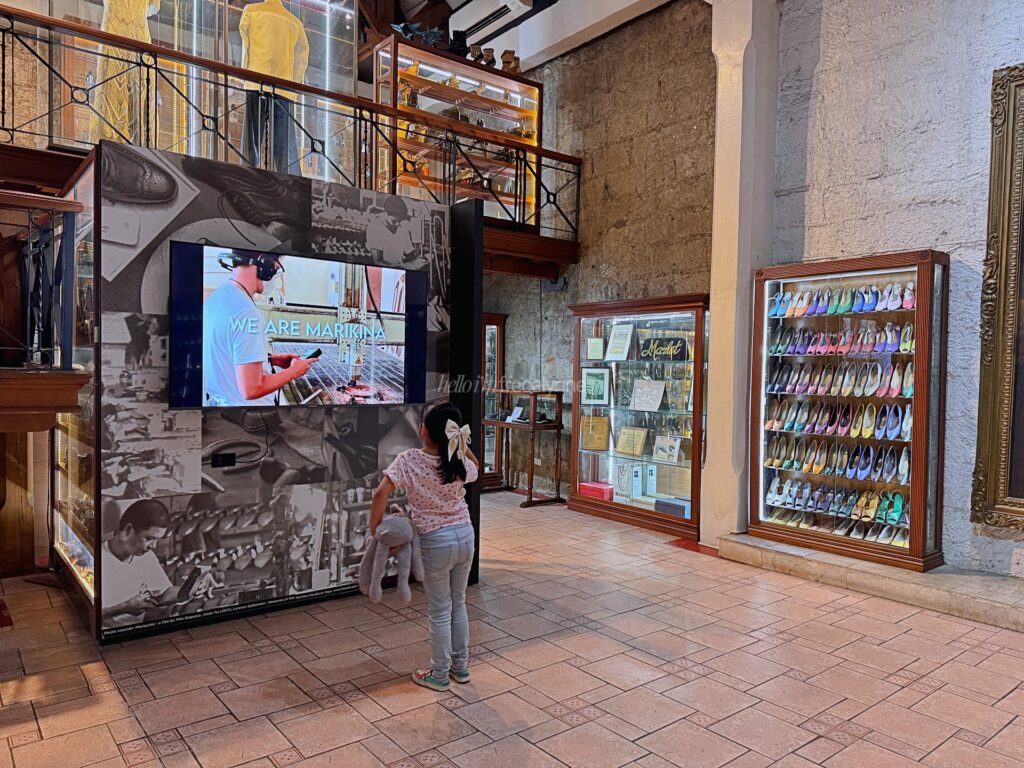
The second floor showcases award-winning designs by local shoe designers. No photos allowed up there, so just soak it in.
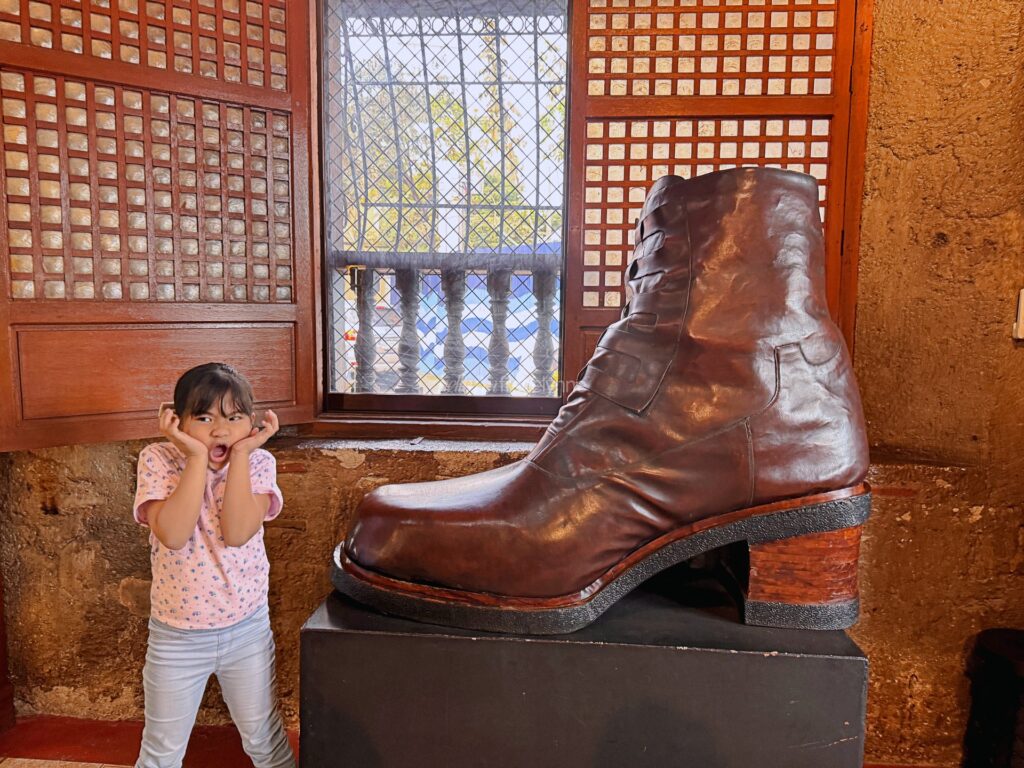
One thing that definitely caught Audrey’s attention: the museum once housed what was certified by the Guinness World Records as the world’s largest pair of shoes. It measured 183 centimeters high, 5.29 meters long, and 2.37 meters wide. This is equivalent to a French shoe size of 753. It took 77 days to finish, and the materials used could have produced 250 regular pairs.
Otto Shoe Museum
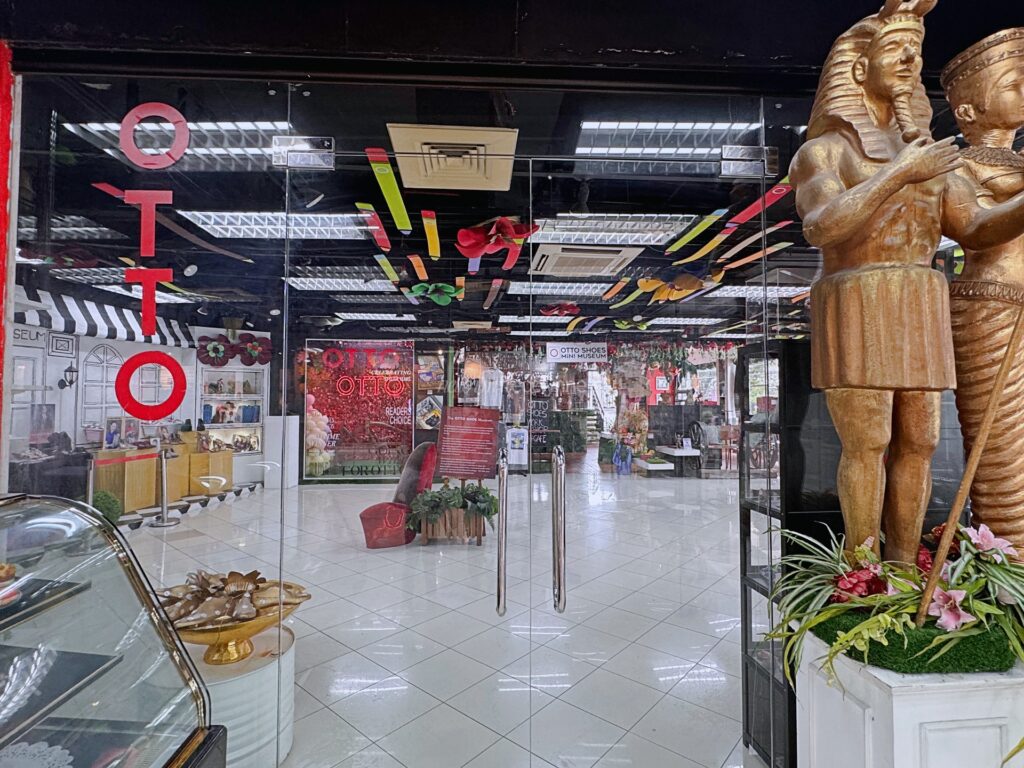
Just nearby is the Otto Shoe Museum, and it’s a different experience from the Marikina Shoe Museum. This one uses shoes as the medium for art.
Otto Shoes was founded in 1979 by Manuel P. Samson, who started making shoes in his family’s backyard. The brand grew from that small home workshop into one of the leading local footwear brands in the Philippines. The museum was built to share the story behind each pair: the skill, the history, and the pride of keeping a local craft alive for the next generation.
Snacks at Mama Chit’s Coffee House
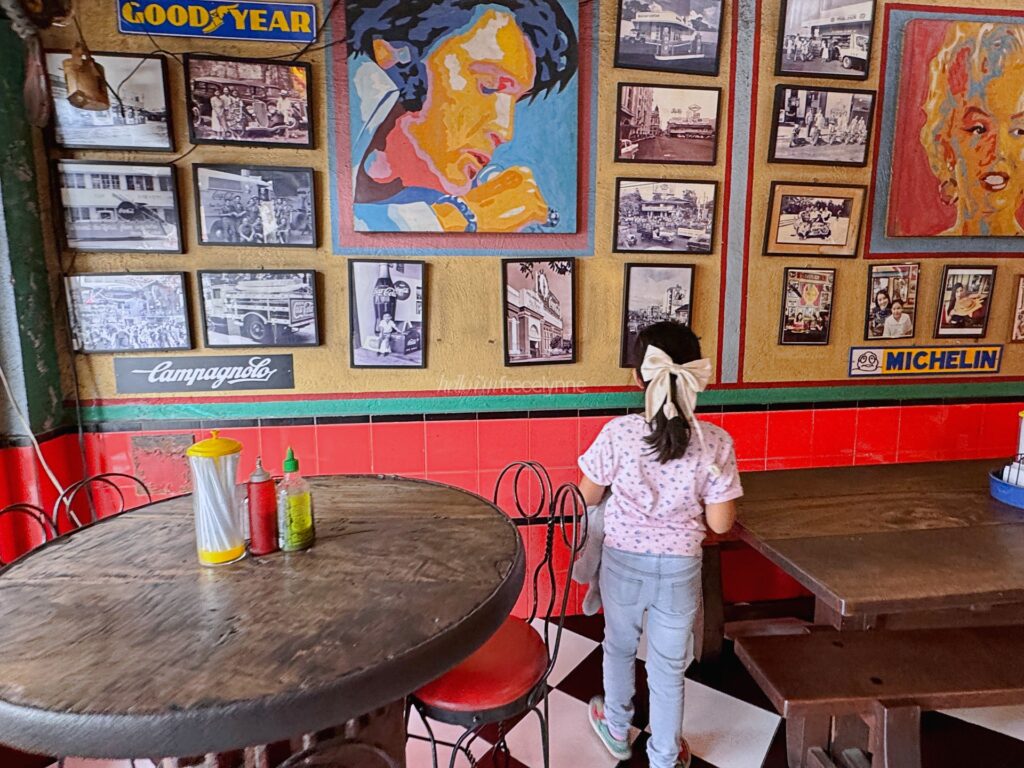
After all the walking, we stopped at Mama Chit’s Coffee House, a retro diner that has been around for years and still looks exactly the same.
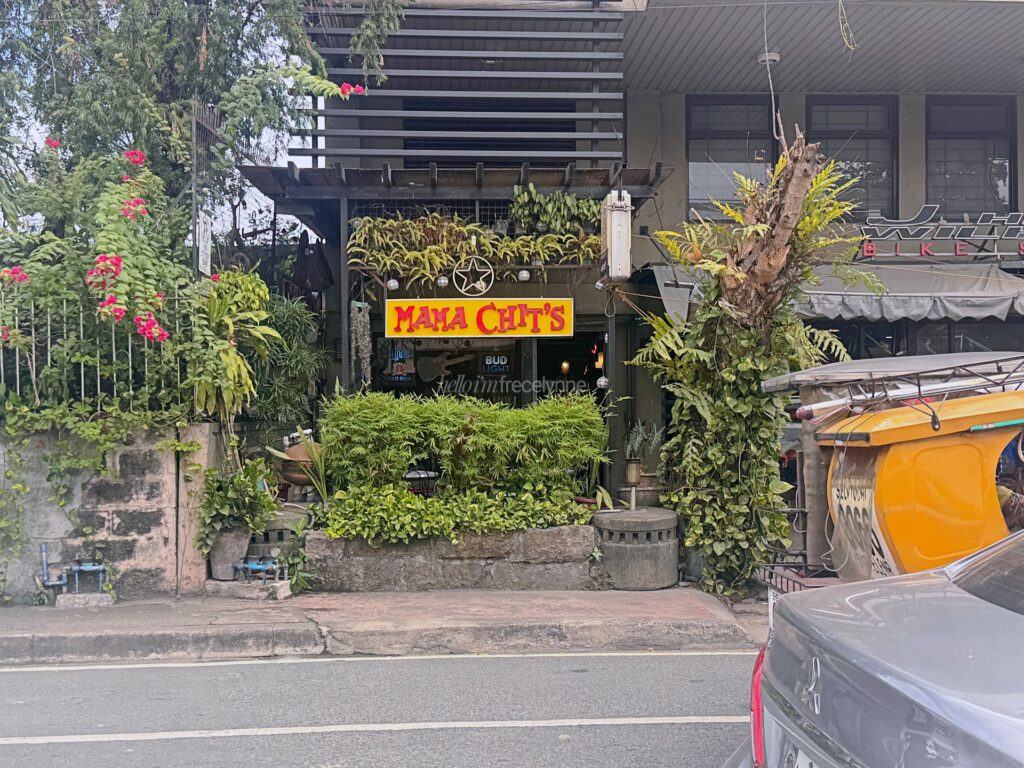
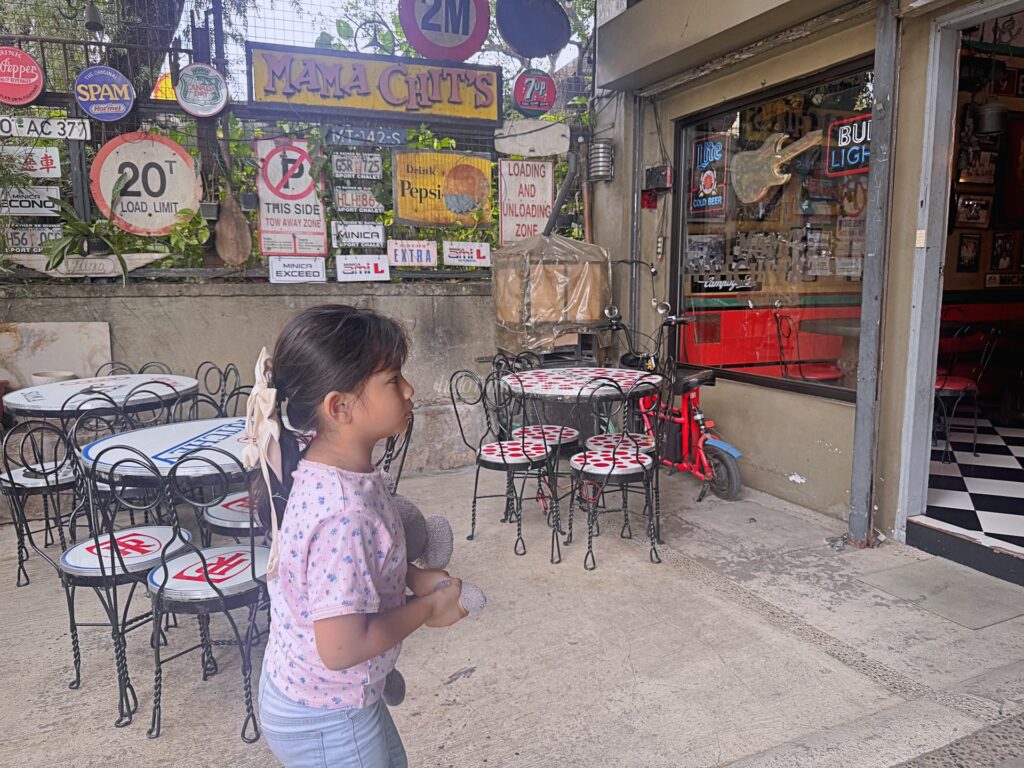
It’s a street-side place, very old-fashioned, and completely unpretentious.
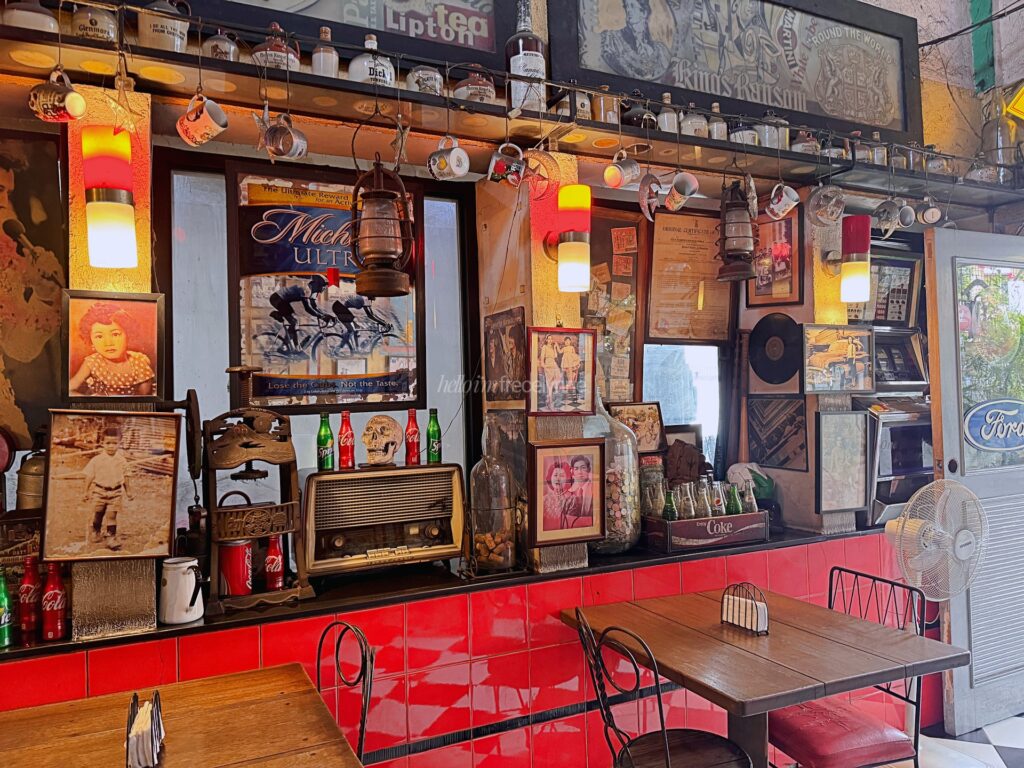
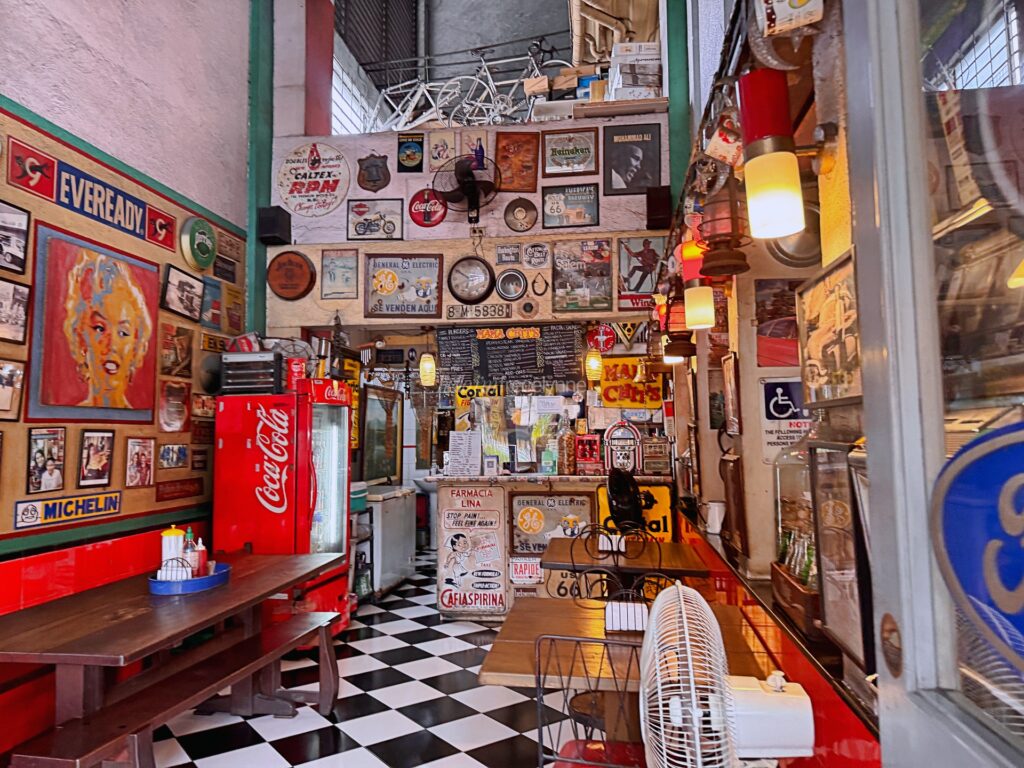
Dee and I used to eat here regularly during our wedding planning days, so going back felt nostalgic.
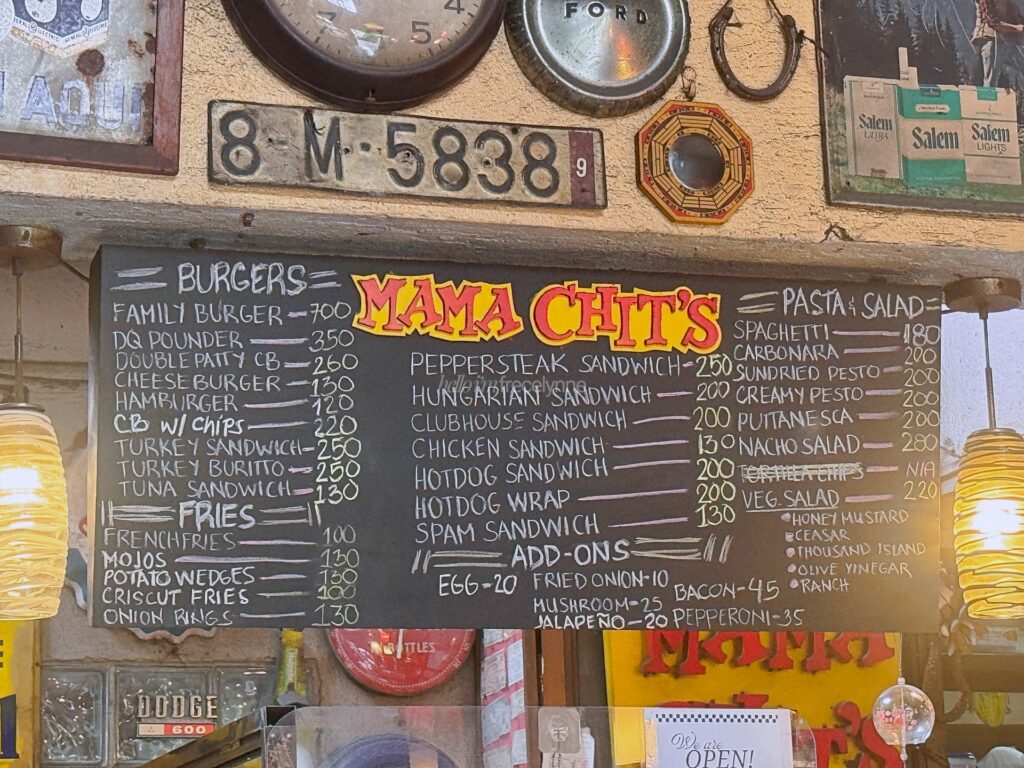
The menu hasn’t changed much, which honestly made me happy. We ordered cheeseburger, fries, spam sandwich, and carbonara. Simple, affordable, and exactly what tired feet needed.
I forgot to take photos of the food.
Teatro Marikina
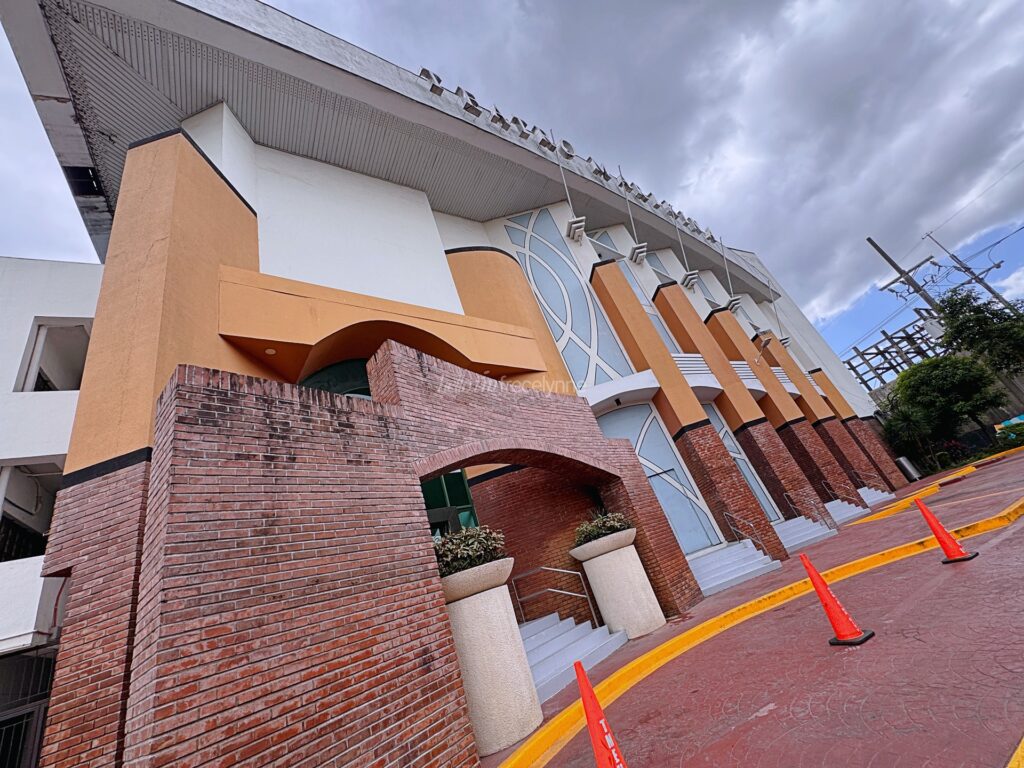
Teatro Marikina was founded in 2003 and has become an important home for the performing arts in Metro Manila. The theater seats 600 people and serves as a venue for local productions, cultural events, and community performances.
There wasn’t a show on the day we visited, so we just walked around and took photos outside. Still worth seeing for the building itself, and worth checking their schedule before your visit in case there’s something on during your trip.
Marikina Express Train Landmark
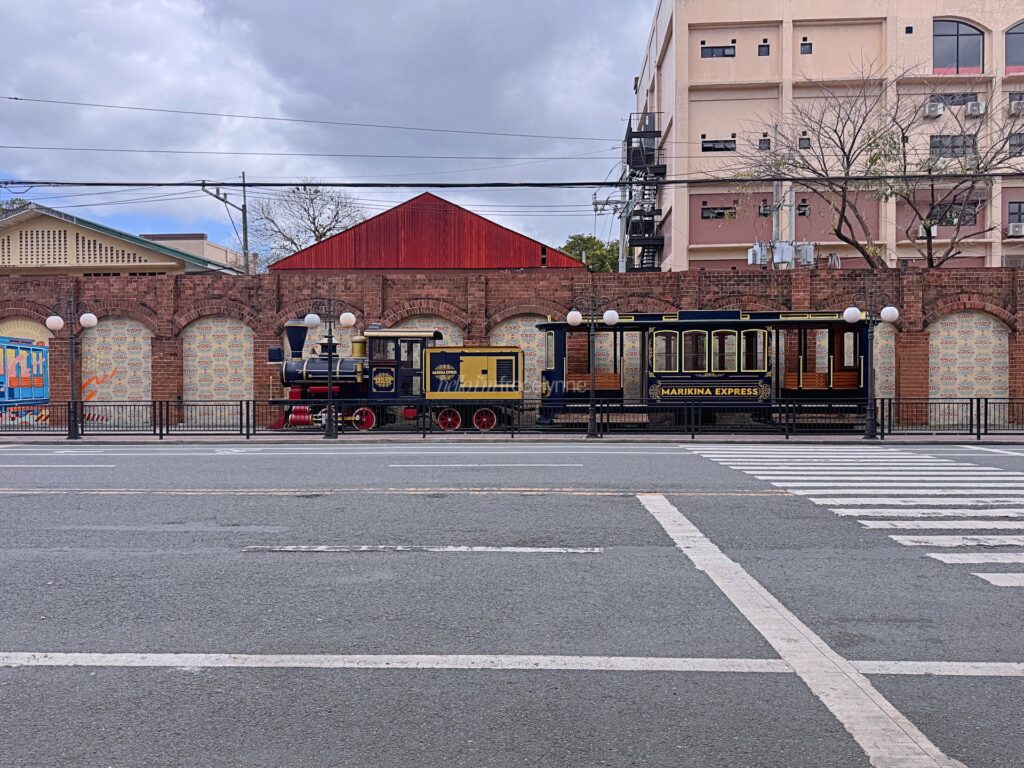
Near the Teatro Marikina, you’ll find the Riverland Express Train — a landmark that references the old Marikina Line, one of three lines operated by the Manila Railroad Company from 1906 to 1936. The line ran from Rosario, Pasig all the way through Marikina, San Mateo, and Montalban, covering 24.27 kilometers.
The train doesn’t run anymore. It’s a historical marker now, and a good reminder that Marikina has always been a place with a story.
Riverbanks Center

If you want to wind down and let the kids run around, Riverbanks Center is a good place to end the day. It’s a 23-hectare mixed-use development along the Marikina River: outlet stores, dining, and a wide riverside park.
It was built in 1995 on the site of a former textile mill. The outdoor space is the draw here: it’s open, easy to walk around, and has a scenic view of the river. If you still have energy, the park paths along the river are good for biking or a slow walk. We kept it simple and just grabbed a drink while Audrey explored.
Marikina River
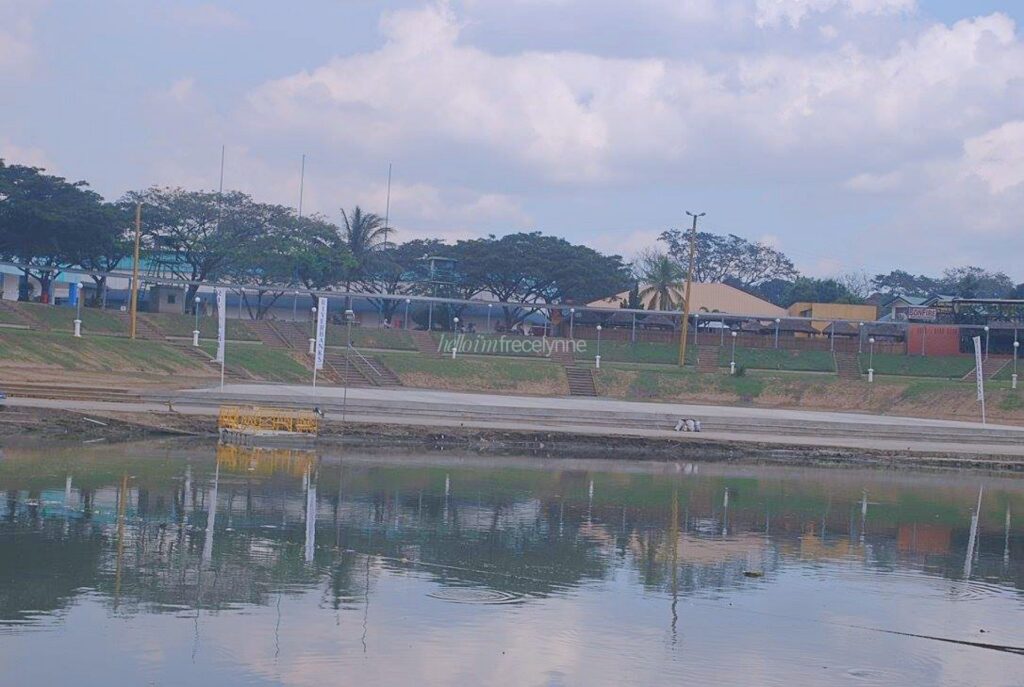
If you want to add one more stop before heading home, Marikina River Park is right there and completely free to enter. It stretches 11 kilometers and covers 220 hectares along the banks of the Marikina River, one of the largest riverside parks in Metro Manila.
The park has been developed since 1993 and has a little of everything: biking and jogging paths, themed gardens, and picnic areas shaded by trees. It’s the kind of place that doesn’t demand anything from you. You can walk slowly, find a bench, and just sit by the river. For kids who’ve spent the morning inside museums, the open space is a relief.
Audrey ran ahead of us the whole time. That’s usually a good sign.
A Few More Spots Worth Knowing
We’ve also visited Marikina Sports Center, Marikina River Park, Flamingoes Garden Resort, and Pan de Amerikana on separate trips. If this isn’t your first time in Marikina and you want to dig deeper, those are worth adding to your list on another visit.
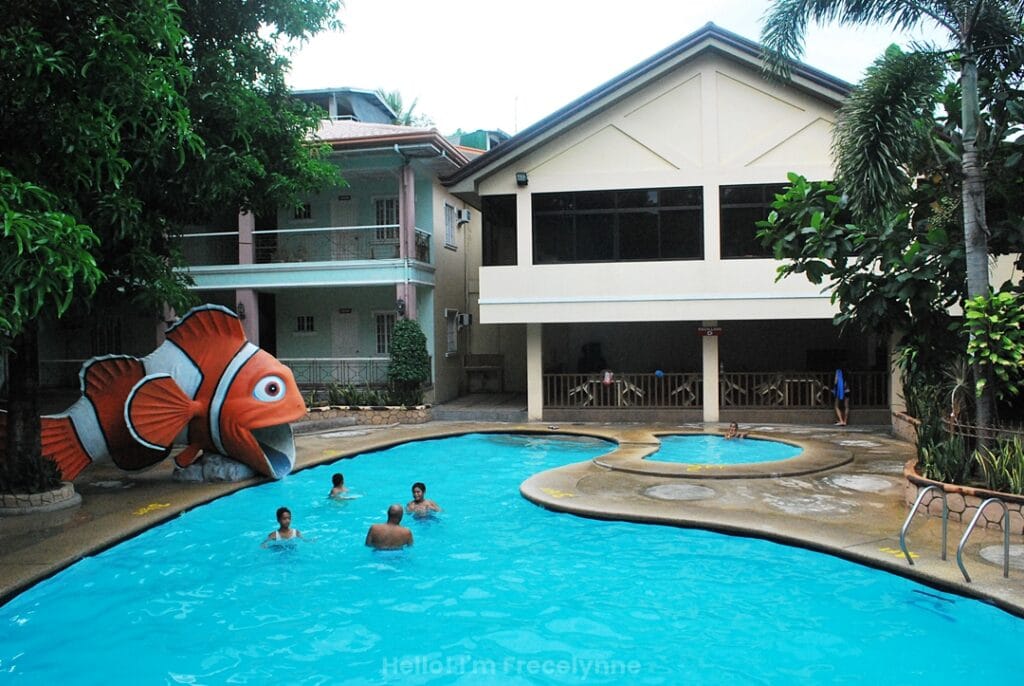
Flamingoes Garden Resort is one we’ve visited as a family. It’s a resort tucked away from the main road. The kind of place that feels like a proper escape without having to leave the city. It has multiple swimming pools with slides, man-made falls, and plenty of shaded areas under mango trees. Good choice if you want a relaxed half-day swim with the kids.
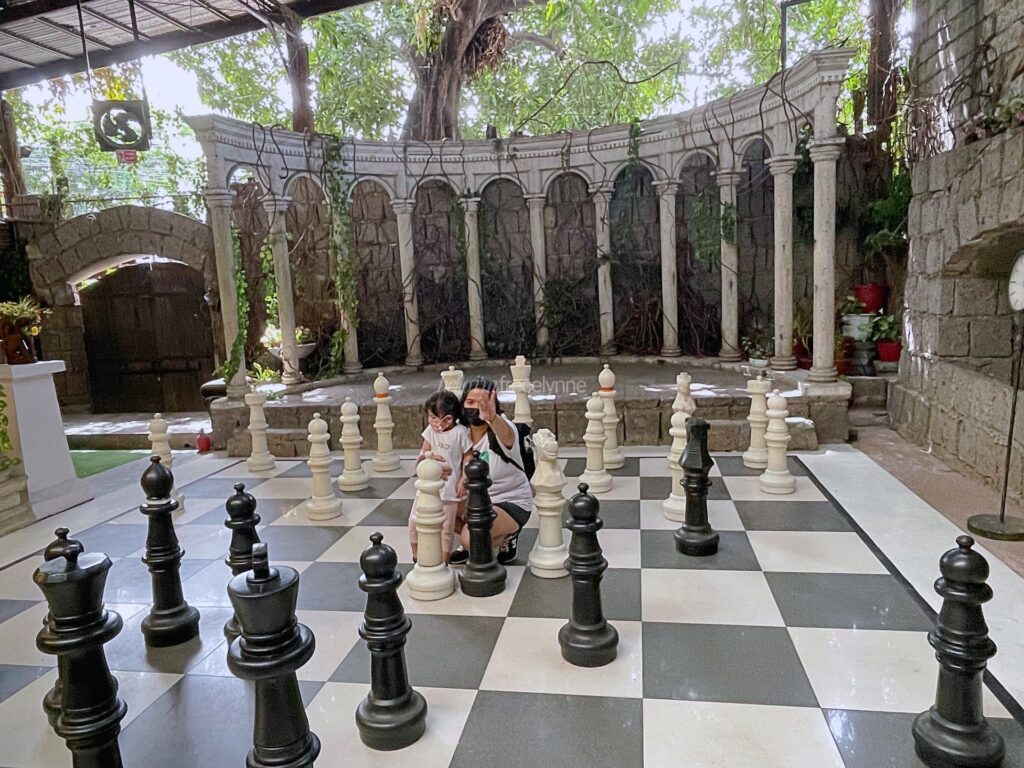
Pan de Amerikana is another one worth adding to your list, especially if you love old-school bakeries. It’s a garden-themed restaurant and bakery along General Ordoñez corner Maroon Street, known for its wood-fire pugon-baked pandesal and giant ensaymada. It was founded in 2003 and has a very nostalgic, 1950s feel to it. It has giant chess sets and upside-down architecture. It’s one of those places that’s as fun to look at as it is to eat at. Great for kids who get curious about everything.

Marikina Sports Center is also worth a mention. Formally known as the Rodriguez Sports Center, this complex has been around since 1969 and sits along Sumulong Highway. It’s open 24/7 and has a 400-meter oval, an Olympic-sized swimming pool, and courts for basketball, tennis, badminton, and volleyball — all for a very low entrance fee.
Quick Tips for Your Marikina Day Trip
Half a day is enough to cover OLAP, Kapitan Moy, and both shoe museums. Add lunch at Mama Chit’s and a stop at Riverbanks and you have a full, relaxed day.
Most of the heritage sites in Marikina are close to each other, so there’s very little commuting involved. Parking is available near Kapitan Moy and Riverbanks. If you’re coming by public transport, jeepneys and UV express routes are readily available from major Metro Manila hubs.
Admission fees for the museums are minimal. The Marikina Shoe Museum has a small entrance fee (Php 50); check before your visit as rates may have changed.
Bring cash and comfortable shoes… because yes, it’s only right to wear good shoes in the Shoe Capital.
Leave a Reply